How to Choose between Dark and Light Flooring?
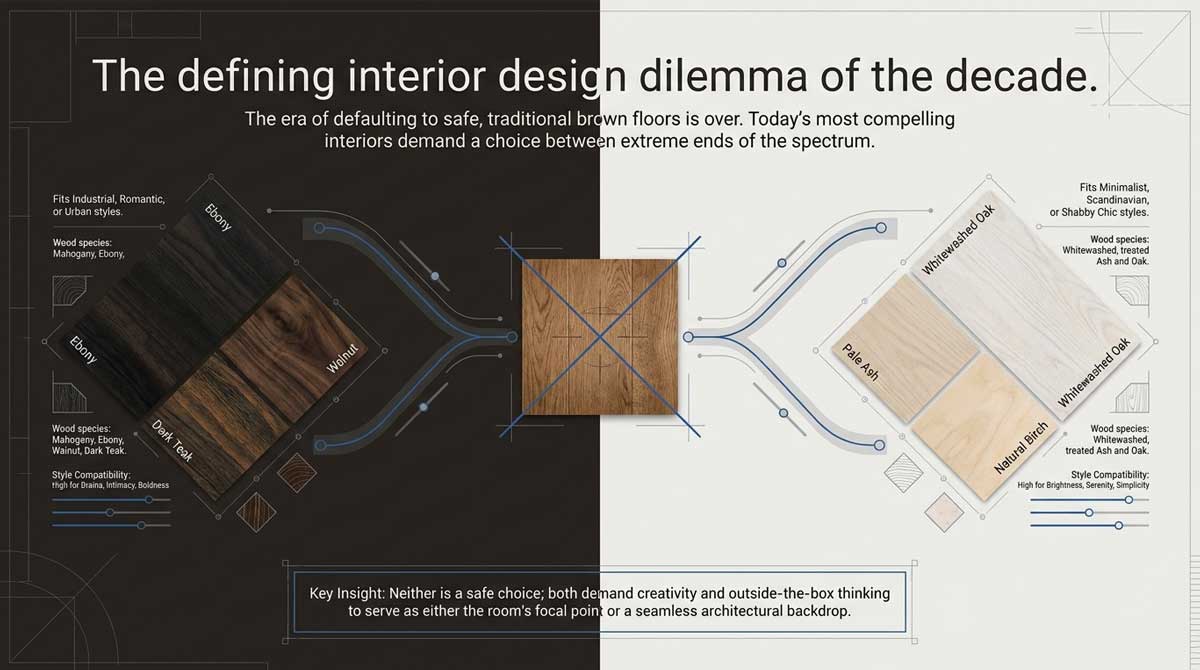
Choose light wood flooring for small or dim rooms and easy upkeep, dark wood flooring for large, bright rooms where you want drama, and a mid-tone floor if you'd like to hide everyday wear without losing warmth. The decision comes down to how big and bright your room is, how much dust and wear you're happy to see, and the look you want.
Both looks are popular, and neither is a safe default. Very light and very dark floors suit modern, minimalist, Scandinavian, industrial and urban interiors, and they can work in country or shabby chic schemes too, depending on how you mix the rest of the room. Either one can be the focal point or a quiet backdrop. The practical differences matter more than which colour you like in a photo.
| What matters | Light floor | Dark floor | Mid-tone floor |
|---|
| Small or narrow room | Opens it up | Can make it feel smaller | Works well |
| Low natural light | Reflects light and brightens | Can feel heavy | Works well |
| Dust and pet hair | Hides it well | Shows it quickly | Hides it well |
| Scratches | Small ones blend in | Pale scratches stand out | Hides daily wear best |
| Spills and muddy footprints | Dark marks show | Hides them better | Moderate |
| Overall feel | Airy, calm, modern | Dramatic, cosy, formal | Warm and flexible |

What does each look offer?
Dark floors bring drama and a sense of luxury, and they make light walls and furniture stand out. Some species are naturally dark, such as walnut, and other boards reach deep shades through staining, smoking or tinted finishes. You can browse walnut engineered wood floors or brown engineered wood flooring to see the range.
Light floors feel bright, calm and contemporary. Very few species are almost white naturally, so near-white looks usually come from whitewashing, bleaching or pale oils and lacquers. Beige engineered wood flooring and light brown laminate are good places to start.
Your interior
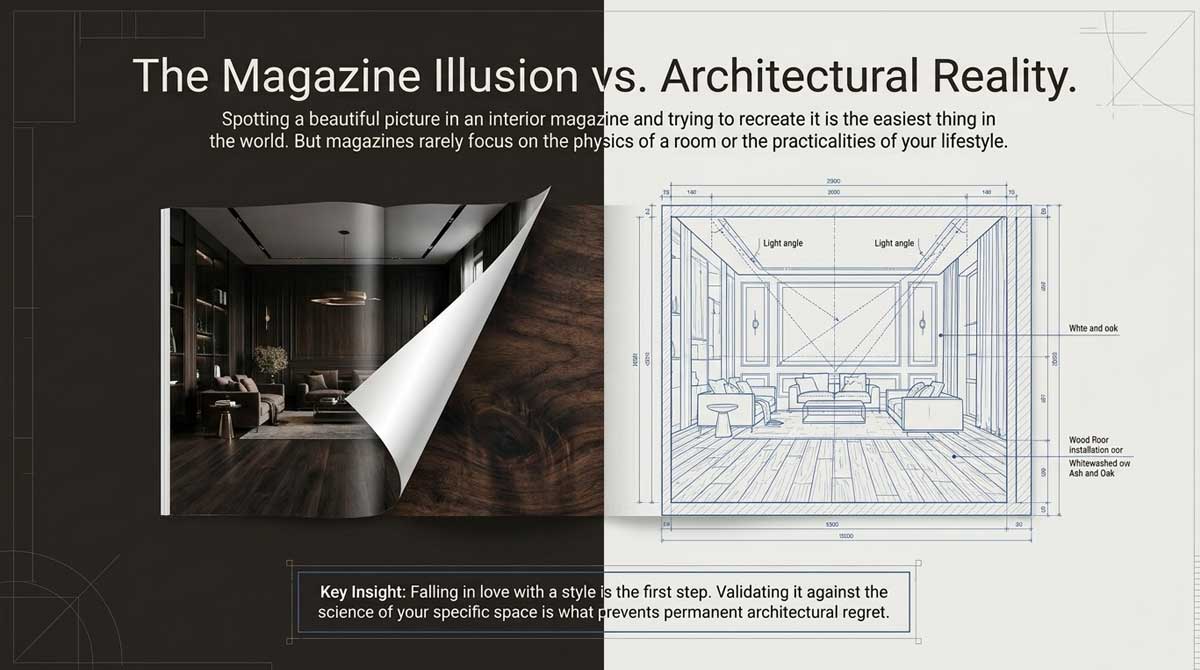
Start with the room you already have, then think about how you live in it. A floor that looks stunning in a magazine photo may not suit a busy family kitchen.
- A dark floor with light walls gives strong contrast, while dark floors with dark walls can make a room feel gloomy.
- A light floor balances dark or heavy furniture and keeps the room from feeling weighed down.
- Dark floors in a children's room or hallway will show scuffs, dust and scratches more, so think about daily use first.
- Light floors in a kitchen look fresh, but spills and muddy footprints show up as dark marks.
- Look at samples next to your cabinets, curtains and sofa before you decide.
Whichever you pick, be honest about the habits it will ask for. A beautiful light or dark floor is easy to enjoy if you're happy with the upkeep that comes with it.
Size of the room
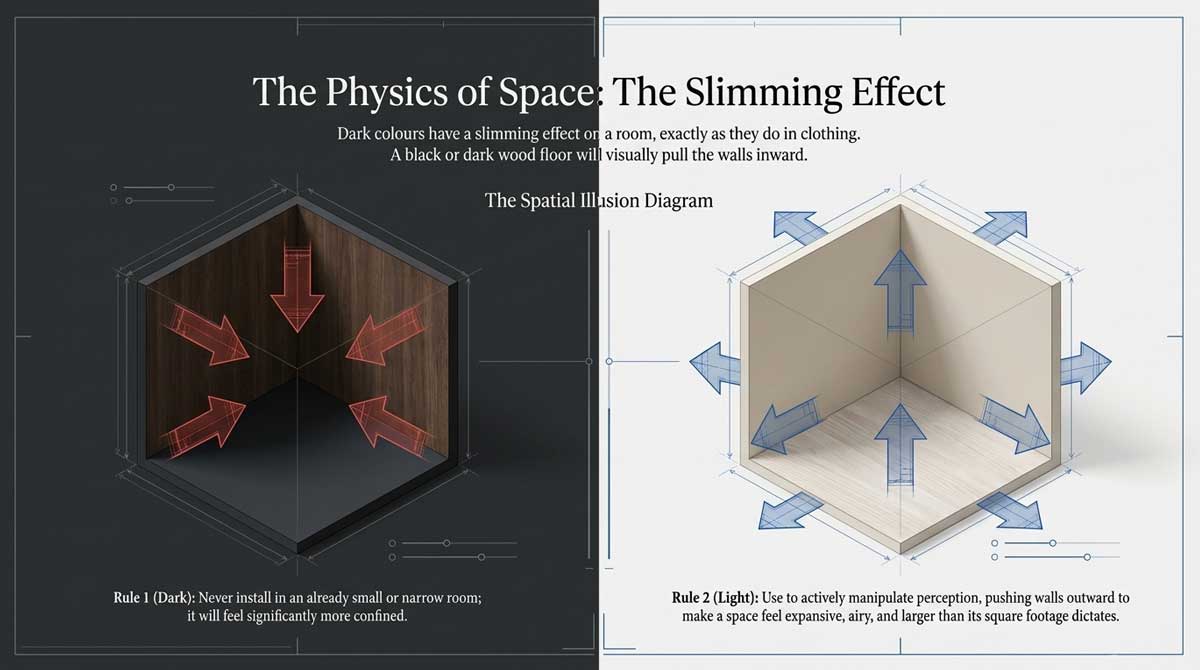
Light floors make a room feel larger, and dark floors can make it feel smaller. That effect is strongest in small or narrow rooms, where a dark floor can close the space in and a pale one stretches it. In a large room, a dark floor looks grounded and elegant rather than cramped.
- Choose a light or mid-tone floor for small rooms, narrow hallways and low ceilings.
- Choose a dark floor for large, high-ceilinged rooms where you want a rich, grounded look.
- Using the same floor from room to room in an open-plan layout makes the whole space feel bigger.
Natural light
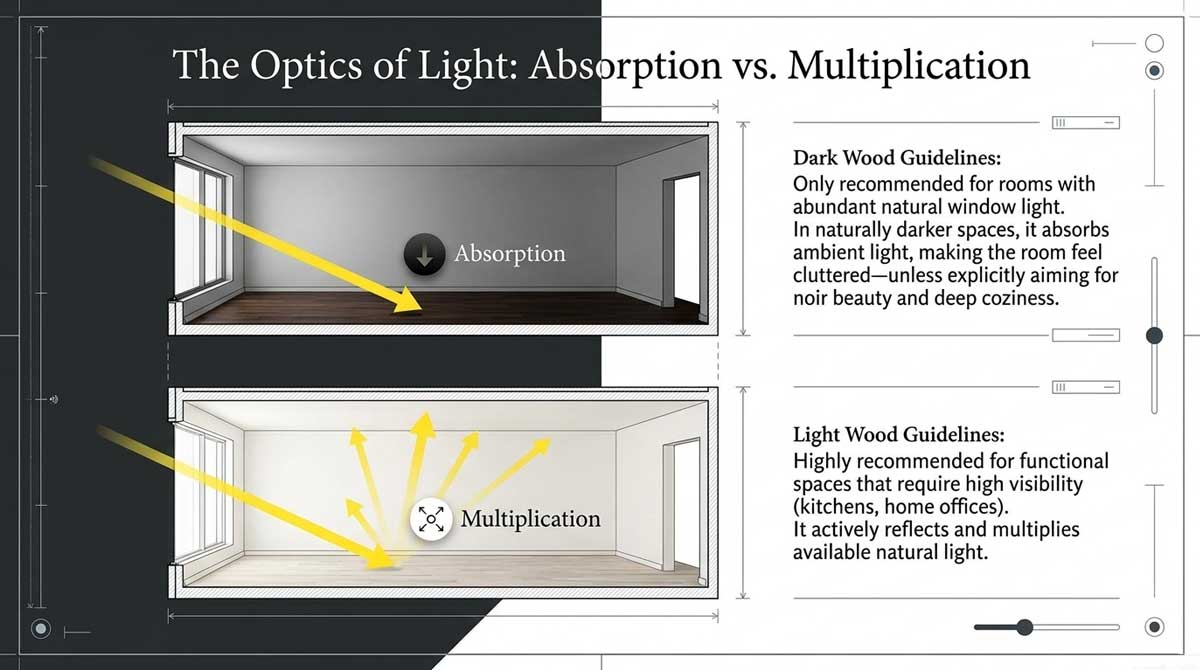
A dark floor works best in a room with plenty of windows, because the daylight keeps it from feeling heavy. In a naturally dark room, a dark floor will make it look even darker, so a lighter floor that reflects the light is usually the better choice. Kitchens and home offices in particular benefit from brightness.
That said, a dark floor in a dim room can be a deliberate choice if you want a cosy, dramatic mood. Colour also looks different at different times of day and under different bulbs, so view your samples in the morning and evening, in the room itself. You can order free samples to do exactly that.
How does wood colour change over time?
Wood changes colour with light, so the floor you fit won't look exactly the same in a few years. As a rule of thumb, light woods tend to darken and naturally dark woods tend to become paler.
- Oak takes on a warmer, amber tone over time.
- Maple becomes warmer and more golden, and cherry darkens quickly.
- Walnut gradually lightens.
- Natural, unfinished or oiled floors change more than varnished or stained ones.
- A finish with a UV filter reduces colour change, but it doesn't stop it completely.
Rugs and furniture can leave lighter or darker patches in sunny spots, so move them now and then. If you want the floor to look the same for years, ask us about the species and finish before you buy.
Maintenance
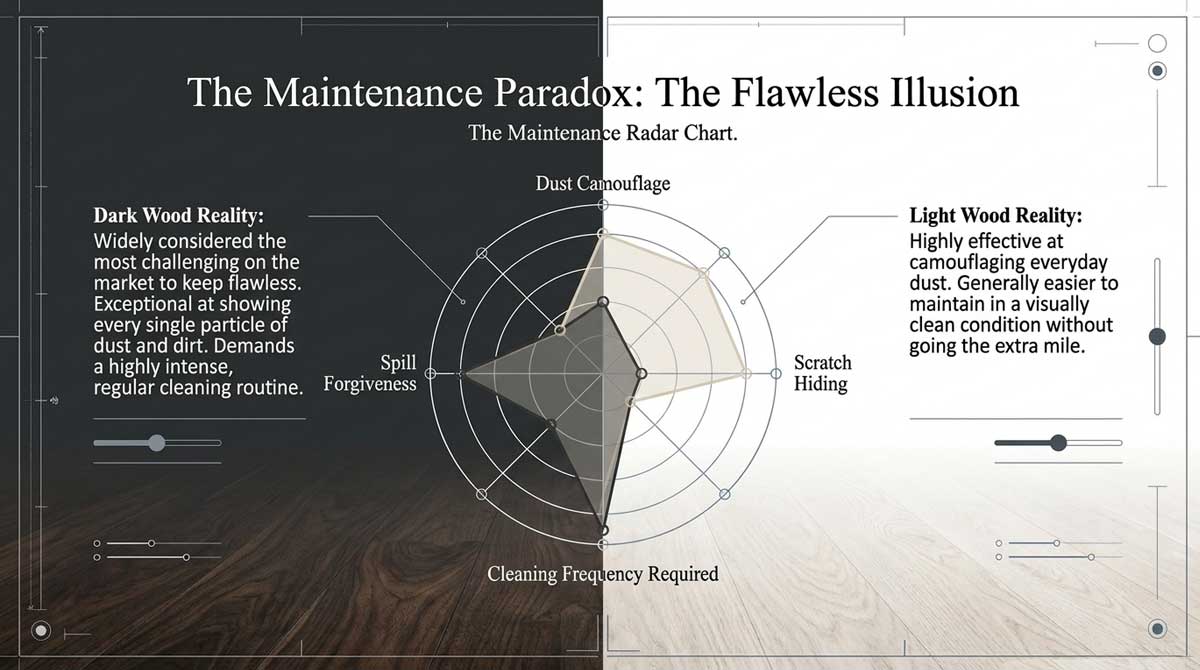
Dark wood floors show dust, pet hair, footprints and scratches more than light ones, so they take a bit more regular cleaning to look sharp. Light floors hide dust and small scratches better and are generally easier to keep looking clean, although they show dark scuffs, spills and muddy footprints more clearly.
- Light-coloured debris and pale scratches stand out against a dark background.
- A matt finish hides marks better than a high-gloss one on any colour.
- A lacquered or oiled finish protects the wood either way, and spills are easier to wipe off than to scrub out later. Browse matt lacquered engineered floors or hardwax oiled engineered floors.
- Doormats, felt pads under furniture and a soft microfibre mop help every floor, whatever its colour.
What about a mid-tone floor?
A mid-tone floor, such as natural or golden oak, is the compromise most people overlook. It's not too light and not too dark, so it hides dust and scratches better than either extreme, suits most colour schemes and works in both small and large rooms. See our oak engineered wood flooring for natural and golden tones.
You can also mix tones across the house, with lighter floors in open living areas and deeper, cosier ones in bedrooms or a study. Keep the palette cohesive so the transitions between rooms feel deliberate.
Which floor types come in light and dark shades?
| Floor type | Light and dark choices | Worth knowing |
|---|
| Engineered wood | Wide range, from pale and beige tones to deep browns | Pre-finished, so the colour is set when you buy it |
| Solid wood | Natural tones, plus unfinished boards you can stain | Changes colour with light over time |
| Laminate | Light brown, grey, greige, dark brown and dark grey | Dust and scratches show in the same way as on wood |
| LVT and SPC | Pale oak looks through to dark, moody planks | Dark shades show dust and light debris more |
For a full overview, browse our wood flooring, laminate flooring and LVT and SPC ranges.
Frequently Asked Questions about light and dark wood flooring
Is light or dark wood flooring better?
Neither is better in every home. Light floors suit small, dim rooms and homes that want easy upkeep, while dark floors suit large, bright rooms and a more dramatic look.
Do dark wood floors show more dust and scratches?
Yes. Dust, pet hair, footprints and pale scratches stand out against a dark surface, so dark floors need more regular cleaning to look their best.
Do dark floors make a room look smaller?
They can, especially in a small or narrow room with little natural light. In a large, bright room a dark floor looks elegant and grounded.
Are light wood floors harder to keep clean?
Not usually. They hide dust and small scratches well, although dark scuffs, spills and muddy footprints show more clearly.
Does wood flooring change colour over time?
Yes. Light exposure darkens or lightens most species, and oak warms to an amber tone while walnut gradually lightens. A UV-filter finish slows it down.
Can I mix light and dark floors in one home?
Yes. Many people use lighter floors in open living areas and darker ones in bedrooms or a study. Keep the palette cohesive so the change between rooms feels planned.
Can I make a light floor darker?
Unfinished solid wood can be stained with wood dyes and stains, but pre-finished boards come in their final colour. If you want a dark floor, it's usually simpler to choose one already finished that way.
See the colours in your own room
The easiest way to decide is to see the floors in your own light. Order up to three free samples and compare them against your walls, furniture and daylight, or call us on 020 8830 9787 for advice. If you'd like help fitting the floor, read about our floor fitting service, or start browsing our real wood flooring now.