Matt vs. Glossy Floor Finishes: Pros & Cons
 A matt finish reflects very little light and leaves a soft, natural-looking surface. A gloss finish (also called glossy or shiny) reflects a lot of light and gives a polished, almost mirror-like look. The choice changes how a floor looks, how quickly scratches and smudges show, and how much cleaning it needs.
As a rule, matt suits hallways, family rooms and other busy spaces because it hides wear. Gloss suits low-traffic rooms where you want depth and brightness. The sections below compare the two side by side, explain the sheen levels in between, cover varnish, lacquer and polish, and look at how each finish copes with kids and pets.
Matt vs gloss floor finish: quick comparison
Neither finish is better overall. Matt wins on practicality and gloss wins on visual impact, so the right one depends on the room.
| Feature | Matt finish | Gloss finish |
|---|
| Appearance | Soft, natural and understated | Bright, reflective, adds depth |
| Scratches and scuffs | Hides them well | Shows them clearly |
| Footprints, smudges and dust | Much less visible | Very visible, especially on dark floors |
| Uneven boards and dents | Masks minor flaws | Highlights them |
| Glare | Minimal | Can be harsh in sunny rooms |
| Slip risk when wet | Generally lower | Higher |
| Cleaning | Wipes clean, no streaks | Wipes easily, but streaks and smears show |
| Effect on room light | Absorbs light | Reflects light, so rooms feel brighter |
| Best suited to | Hallways, family rooms, kitchens, offices, homes with pets and children | Low-traffic living rooms, dining rooms and formal spaces |
Choose matt if:
- the floor takes daily foot traffic
- you have children or pets
- you want a floor that looks tidy with little effort
Choose gloss if:
- the room is used lightly, such as a formal lounge or dining room
- you want a bright, reflective look that shows off the grain
- you don't mind wiping the floor more often
Still undecided? Satin sits between the two and is covered in the sheen levels section below.
Matt floor finishes
Pros
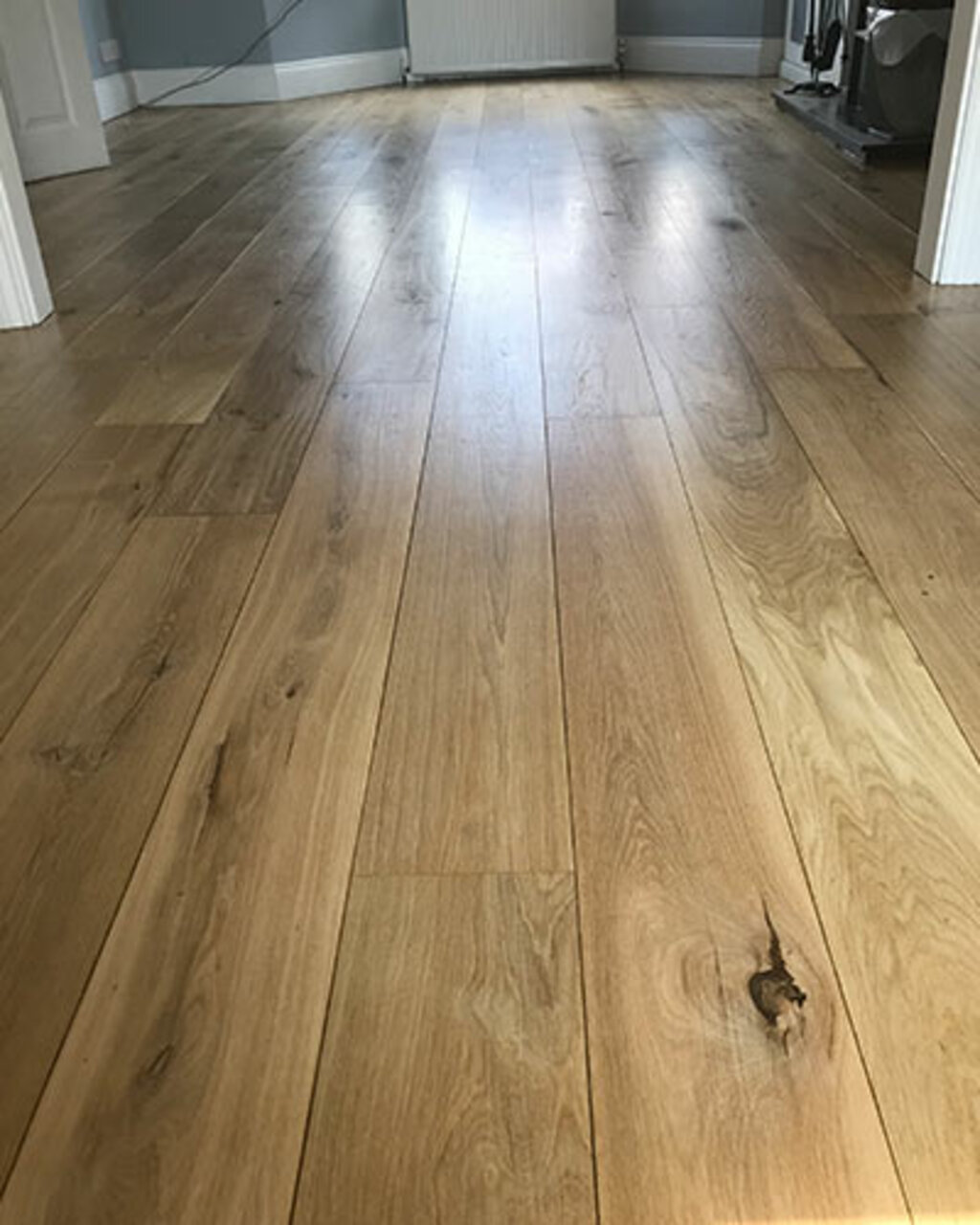 Matt floor finishes have become popular because they look natural and forgive everyday wear. Light doesn't bounce off the surface, so scratches and marks blend into the grain instead of catching the eye.
- A natural, muted look that suits both traditional and modern interiors
- Hides scratches, scuffs and footprints better than any glossier sheen
- Minimal glare, which helps in bedrooms, offices and rooms with large windows
- Feels less slippery underfoot than a high gloss surface
Cons
- Less depth. On plain or pale boards a matt floor can look flat, especially in a dim room.
- Burnishing. In heavy wear spots such as doorways, the matting agent in the coating can wear down and leave shinier patches.
- Darker rooms. Matt absorbs light where gloss reflects it, so a small room can feel slightly less bright.
- Patch repairs need care. An uneven extra coat can leave a visible difference in sheen.
Glossy floor finishes
Pros
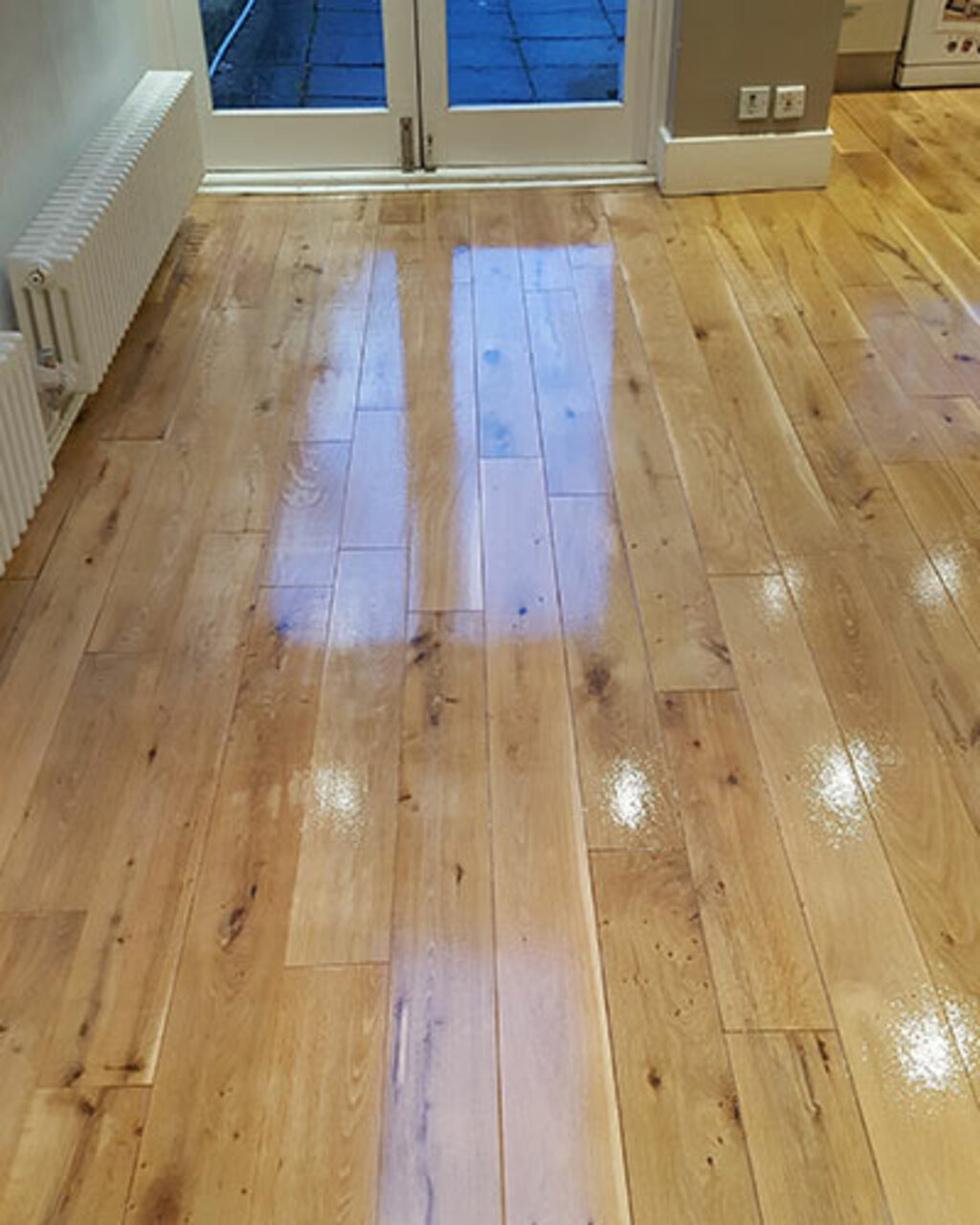 Glossy floor finishes give a floor a rich, polished look that matt can't match. The reflective surface picks up light from windows and lamps, so a room can look larger and brighter.
- Brings out the depth, colour and grain of the wood
- Reflects light, which helps in narrow or north-facing rooms
- The smooth surface is quick to wipe clean
- Makes a strong statement in formal rooms
Cons
Gloss is not tougher than matt. The hardness of a finish comes from the lacquer itself, and a gloss coat simply shows damage sooner.
- Scratches, scuffs and dents show up clearly, particularly where furniture gets dragged
- Fingerprints, smears, footprints and dust are easy to see, so the floor needs frequent wiping
- Slippery when wet, and in socks, which matters in kitchens and bathrooms
- Highlights imperfections such as uneven boards, gaps and dents
- Glare in rooms with strong sunlight
Floor finish sheen levels: matt, satin, semi-gloss and high gloss
Matt and gloss are the two ends of a scale. Most floor finishes come in several sheens in between, and the middle options are often the best compromise.
| Sheen | How it looks | Wear and scratches | Good for |
|---|
| Matt (including extra matt) | Almost no shine, close to bare or oiled wood | Hides marks best | Hallways, family rooms, kitchens, offices |
| Satin (often sold as silk matt) | Soft glow with a slight sheen | Hides most marks | Living rooms and bedrooms |
| Semi-gloss | Noticeable shine and some reflection | Shows scratches moderately | Dining rooms and lightly used spaces |
| High gloss | Mirror-like, highly reflective | Shows almost everything | Feature rooms with little traffic |
Brands don't name or measure sheen in the same way. A "satin" from one manufacturer can look closer to another's "semi-gloss", and gloss readings (given as a percentage or in gloss units) aren't directly comparable between products. Check the product datasheet, and if possible, look at a sample board in your own room at different times of day before you commit.
Many professional lacquers are sold in more than one sheen. Bona Traffic HD, for example, is available in several, which lets you pick the look without changing the protection system underneath.
Matt vs gloss floor varnish, lacquer and polish
On varnishes and lacquers, the sheen is a choice about appearance. Protection comes mainly from the type of coating (water-based, solvent-based or two-pack), not from how shiny it is. Sheen also matters for polish and for oil finishes, which work differently.
Varnish and lacquer
A matt floor varnish or lacquer gives the low-sheen look most homes go for, while a gloss floor lacquer gives a bright, glass-like surface. Both form a protective film on top of the wood. A few practical differences are worth knowing before you buy:
- Matt coatings contain matting agents that settle in the tin. Stir thoroughly before and during use, or the sheen can dry patchy.
- Keep coats consistent. Apply the same number of coats across the whole floor and roll in the same direction, since uneven coats change the sheen.
- Gloss shows application faults. Roller marks, brush lines and trapped dust are far more obvious, so preparation and a dust-free room matter more.
- Oils and hardwax oils are a different system. They soak into the wood instead of forming a film and usually finish matt or satin.
Floor polish
Polish is a maintenance product, not a finish. A matt polish keeps a low sheen, while a gloss polish builds up shine over time. Use only polishes recommended for your finish. Wax-based and silicone polishes on a lacquered floor can leave a residue that stops future coats bonding properly, which makes recoating difficult.
You can browse our full range of floor lacquers, oils and finishing products in matt, satin and gloss.
Which finish holds up best with kids, pets and heavy traffic?
A matt or satin lacquer holds up best in practice, because it hides the scratches, scuffs and sticky marks that children and pets leave behind. The sheen doesn't make the floor harder wearing. A gloss floor with a tough traffic-grade lacquer can be just as durable, but it will show every mark.
| Situation | Best sheen | Why |
|---|
| Young children | Matt or satin | Hides scuffs from toys and sticky fingerprints |
| Dogs | Matt | Claw scratches blend in, and the surface gives better grip |
| Hallways and entrances | Matt | Grit from shoes causes fine scratches that gloss exaggerates |
| Kitchens | Matt or satin | Hides splashes and marks, and less slippery when wet |
| Low-traffic living or dining rooms | Satin, semi-gloss or gloss | Little wear, so the extra shine is worth having |
Whichever sheen you pick, a few habits protect the finish:
- Use a hard-wearing, traffic-grade lacquer in busy rooms
- Put felt pads under furniture legs
- Place doormats at entrances to catch grit
- Keep pets' claws trimmed
- Wipe spills promptly
Very glossy floors can also be hard going for older or less steady dogs, who struggle for grip on a slick surface. If you love a glossy look and have pets, satin is often the better compromise.
Factors to consider when choosing a floor finish
- Lighting. Bright, sunny rooms can make gloss glare. Dim rooms may benefit from the reflection.
- Foot traffic. Busy areas need a finish that hides wear, which usually means matt or satin.
- Condition of the floor. Gloss highlights uneven boards, gaps and dents, so it needs a well-prepared surface.
- Maintenance. Gloss needs more frequent wiping to keep smears and dust from showing. Matt is more forgiving.
- Personal style. The finish shapes the whole feel of a room, from relaxed and natural to sleek and formal.
Choosing the right floor finish
Different flooring materials call for different finishes, so check that the finish you like is suitable for your floor. Compare sample boards in your own room, ask a flooring professional if you're unsure, and think about how much maintenance you're happy to do, since the most delicate-looking finish is not always the one that suits your household.
Ready to choose? Browse our floor finishing products to compare matt, satin and gloss options for your floor.