Best Underlay for Parquet Flooring: What You Need to Know
Whether you need an underlay for parquet flooring depends on how it's fitted. Parquet that's glued down doesn't need an underlay, because the blocks bond straight to the subfloor, while engineered parquet that's floated on a click system does.
In both cases, the right underlay or damp-proofing makes a real difference to sound, warmth and moisture protection. This guide explains when underlay is required, which types suit parquet, how thick it should be, and what to use over concrete, timber and underfloor heating.
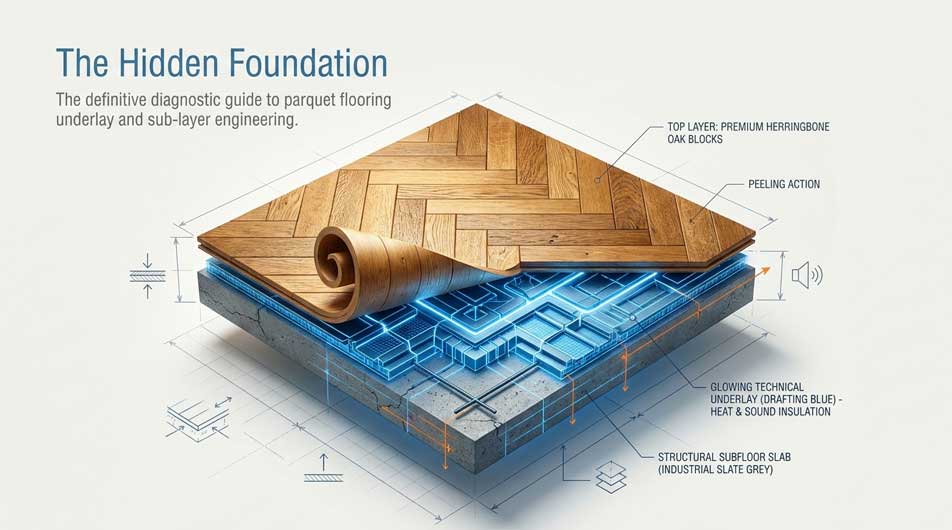
| Your parquet | What goes under it |
|---|
| Solid parquet, glued down | No underlay. Prepare the subfloor and use the right adhesive, with a damp-proof membrane over concrete |
| Engineered click parquet, floating | A thin, dense underlay, with a built-in damp-proof membrane over concrete |
| Parquet over underfloor heating | A thin underlay made for underfloor heating, or the right adhesive if glued down |
| Parquet in a flat or on an upper floor | An acoustic underlay if floating, or a slatted acoustic mat with the matching adhesive if bonded |
Do you need underlay for parquet flooring?
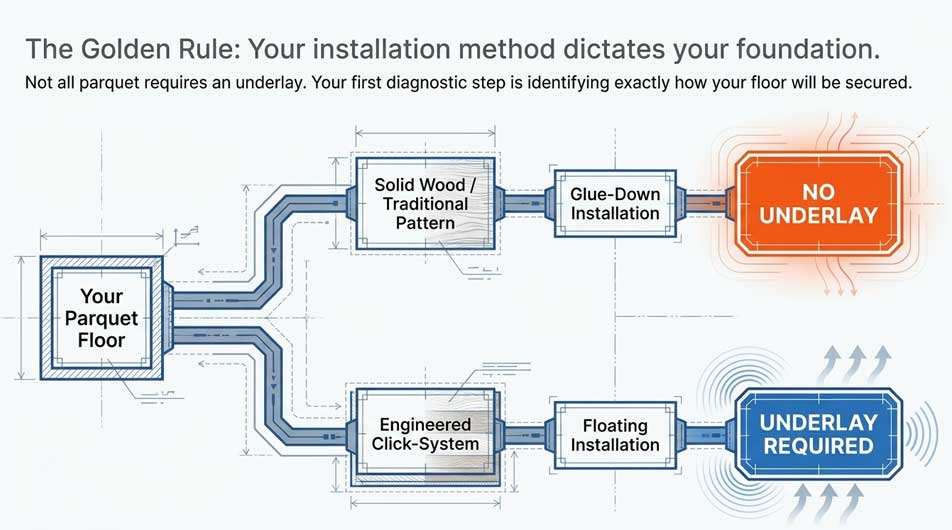
For traditional solid wood parquet, underlay isn't normally used, because the blocks are glued directly to the subfloor. Engineered parquet is different, especially products with a click system, where an underlay is usually needed for a successful floating installation. These are the two main methods:
- Glue-down installation is the usual method for herringbone and chevron patterns, and it doesn't use underlay. A high-quality flexible adhesive goes straight onto the prepared subfloor. For full details, see our guide on how to install parquet flooring.
- Floating installation suits some engineered parquet floors, which are floated over an underlay that adds cushioning, moisture protection and sound reduction. Our guide to glue-down vs floating parquet compares the two.
Also think about your subfloor and heating. Over concrete, a damp-proof membrane is often needed, and if your home has underfloor heating, you need a system that lets the heat through efficiently.
Choosing the right underlay by room
The best underlay for parquet also depends on the room, because each has different demands for sound, warmth and moisture.
| Room | What to choose |
|---|
| Living rooms | An acoustic underlay to reduce footfall noise. See our guide to the best flooring for living rooms |
| Bedrooms | A thermal underlay for warmth, plus an acoustic layer upstairs. Our bedroom flooring guide has more options |
| Basements | An underlay with an integrated damp-proof membrane, because humidity is a risk below ground. Read our guide to the best flooring for basements |
| Hallways | A durable, supportive underlay with moisture resistance for busy entrances. See our best hallway flooring guide |
| Home offices | A dense underlay with sound absorption that copes with chair castors. Read our home office flooring article |
Types of underlay for parquet flooring
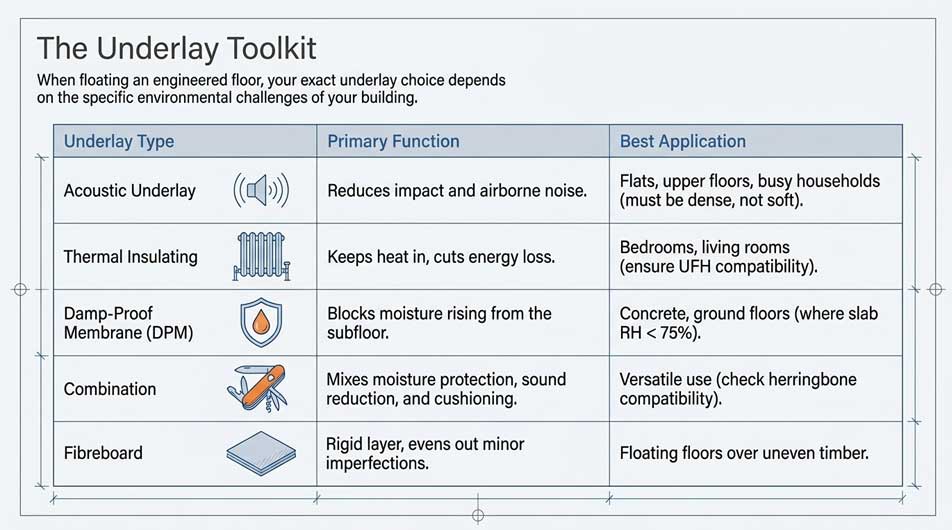
The type you choose affects how the parquet performs, so match it to the installation method and the room. Our flooring underlay and insulation range lets you filter by thickness, built-in membrane and sound reduction.
| Type | What it does | Good to know |
|---|
| Acoustic underlay | Reduces impact and airborne noise | Best for flats, upper floors and busy households. Choose a dense one, not a soft one |
| Thermal insulating underlay | Keeps heat in and cuts energy loss | A good match for bedrooms and living rooms, but not every version suits underfloor heating |
| Damp-proof membrane (DPM) underlay | Blocks moisture rising from the subfloor | Needed over concrete and on ground floors. It works as long as the slab's relative humidity doesn't exceed about 75% |
| Combination underlay | Mixes moisture protection, sound reduction and cushioning | Versatile, but check it's approved for your parquet, especially herringbone or chevron |
| Fibreboard underlay | A rigid layer that evens out minor imperfections | Used under floating floors, not suitable for glue-down parquet |
| Slatted acoustic mat | Cuts footfall noise under bonded wood floors | The exception to the glue-down rule: the adhesive fills the cut-outs, as with Wakol TS160 and its matching adhesive |
What thickness of underlay for parquet?
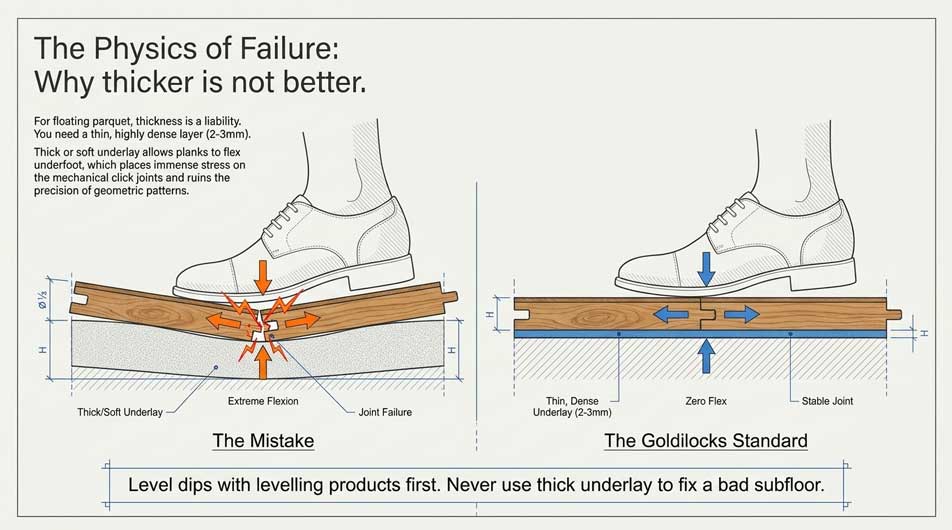
For floating parquet, a thin, dense underlay is best, usually around 2 to 3mm, though your floor's installation instructions have the final say. Thick or soft underlay lets the planks flex, which can stress the click joints and make herringbone and chevron layouts shift. A flat subfloor matters more than a thick underlay, so level any dips first with our damp proofing and levelling products.
Underlay for parquet over concrete, timber and underfloor heating
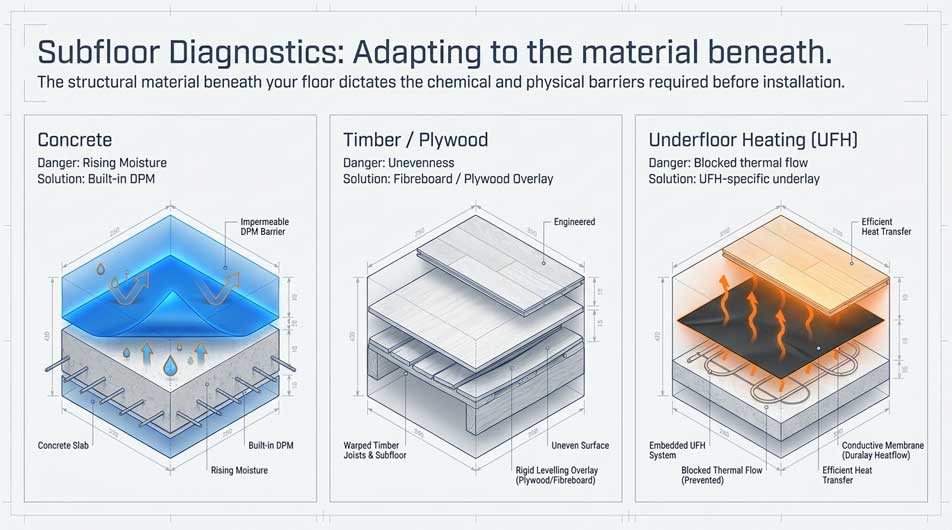
- Over concrete: for a floating floor, use an underlay with a built-in DPM. For a glued-down floor, don't add an underlay. Use a damp-proof membrane or primer that suits the adhesive, because the subfloor needs to be flat, clean and dry. Our floor adhesives cover the bonding side.
- Over timber floorboards or plywood: fix any loose boards first. Glue-down parquet usually goes on a plywood overlay, while a floating floor can go on a suitable underlay or fibreboard to even out the surface.
- Over underfloor heating: choose an underlay marked as suitable for underfloor heating, such as Duralay Heatflow, which allows heat to pass through. A thick or heavily insulating underlay can block the heat and make the system less efficient.
Common mistakes to avoid
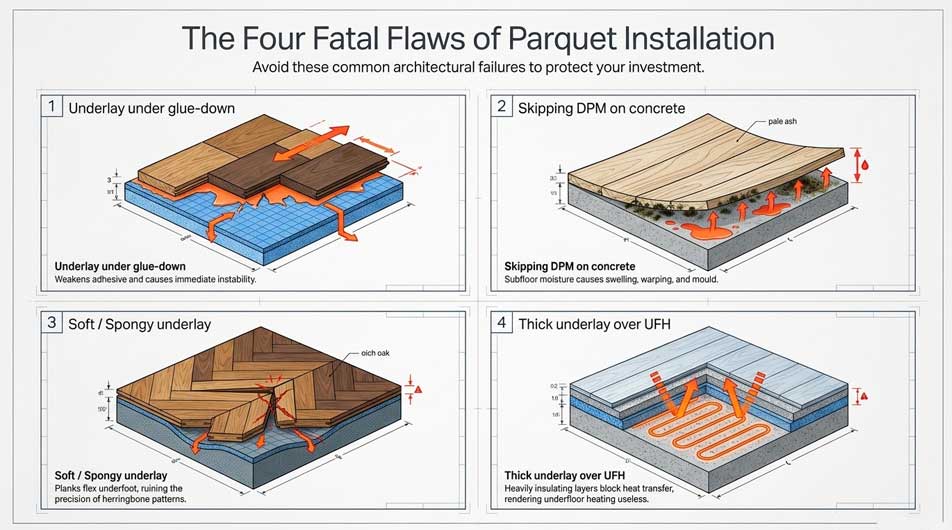
- Putting an underlay under glue-down parquet. The blocks need to bond directly to the subfloor, and an underlay beneath can cause instability and weaken the adhesive. The slatted acoustic mats made for bonded floors are the exception.
- Skipping moisture protection over concrete or in basements, which can lead to swelling, warping or mould.
- Using an underlay that isn't compatible with underfloor heating, or one that's too insulating or thick.
- Choosing a soft, spongy underlay, which lets parquet blocks flex and ruins the precision of herringbone and chevron patterns.
- Ignoring sound in flats and upper floors, where a poor underlay lets noise travel between levels.
Avoid these mistakes and your parquet should look good and last. If you're unsure what's right for your floor, contact our team for advice tailored to your room and subfloor.
Frequently Asked Questions about Parquet Underlay
Can I use underlay with glue-down parquet flooring?
No. Glue-down parquet needs to bond directly to the subfloor for stability. The exception is a slatted acoustic mat designed for bonded floors, used with its matching adhesive. For floating engineered parquet, underlay is the right choice, and our guide on glue-down vs floating parquet explains more.
What underlay should I use for parquet over concrete?
For floating parquet, use an underlay with a built-in damp-proof membrane. For glued-down parquet, skip the underlay and use a damp-proof membrane or primer that suits the adhesive. This matters most on ground floors and in basements.
What thickness of underlay is best for parquet?
A thin, dense underlay, usually around 2 to 3mm. Soft or thick underlay can stress click joints and shift the pattern, so follow your floor's instructions.
Is underlay compatible with herringbone parquet?
Only with engineered click parquet that's made for floating. Most traditional herringbone is glued down and doesn't use underlay.
What's the best underlay for soundproofing parquet floors?
For floating parquet, choose a dense acoustic underlay made for wood floors, such as rubber or high-density foam. For bonded parquet in a flat, a slatted acoustic mat with the matching adhesive reduces impact noise.
Can I install underlay over underfloor heating?
Yes, but only an underlay marked as suitable for underfloor heating. It lets heat pass through efficiently, while a thick or heavily insulating one can block it.
The right underlay helps your parquet look good, feel comfortable and last, whether you're floating an engineered floor or preparing a moisture-sensitive subfloor for gluing. Browse our full range of underlay and insulation for acoustic, thermal and moisture-resistant options. For more reading, see our guide to sanding parquet flooring, or visit our London showroom for one-to-one advice.