Wood Flooring Species Guide: Oak, Walnut, Ash, Maple & More
Choosing the right wood flooring species is one of the most important decisions you'll make when fitting a new floor. The species determines hardness, colour, grain character, maintenance requirements, and ultimately how long your floor will last under real-world use. For homeowners comparing wood flooring species suppliers' stock, the choice has never been wider — but a wider choice means more room for expensive mistakes. This guide cuts through the confusion with the practical information you need to make the right call.
Why Species Matters More Than You Might Think
Most people choose wood flooring on looks alone, then discover too late that their beautiful American Cherry has dented under a dining chair or that their pale Maple shows every scuff. Species affects far more than appearance:
- Hardness — determines resistance to dents, scratches, and heavy foot traffic
- Stability — how much the wood moves with changes in humidity and temperature
- Finish absorption — some species take oils and stains readily, others are resistant
- Colour change over time — most species shift significantly with UV exposure
- Price — driven by availability, sourcing distance, and processing complexity
Hardness is measured using the Janka hardness test, which records the force required to embed a steel ball halfway into a wood sample. The higher the Janka rating, the harder — and generally more durable — the species. Use the table below as your baseline reference.
Janka Hardness Comparison Table
| Species | Janka Rating (lbf) | Relative Hardness | Typical Price (per m²) |
|---|
| Strand-Woven Bamboo | 3,000+ | Exceptionally hard | £30–£60 |
| Hard Maple | 1,450 | Very hard | £45–£90 |
| European Oak | 1,360 | Hard | £25–£80 |
| Ash | 1,320 | Hard | £35–£75 |
| American Walnut | 1,010 | Moderately hard | £50–£110 |
| American Cherry | 950 | Moderately soft | £40–£85 |
A higher Janka rating is not always better. A very hard floor is less forgiving underfoot and can be harder to sand and refinish. The right hardness depends on how the room is used.
European Oak — The Standard for Good Reason
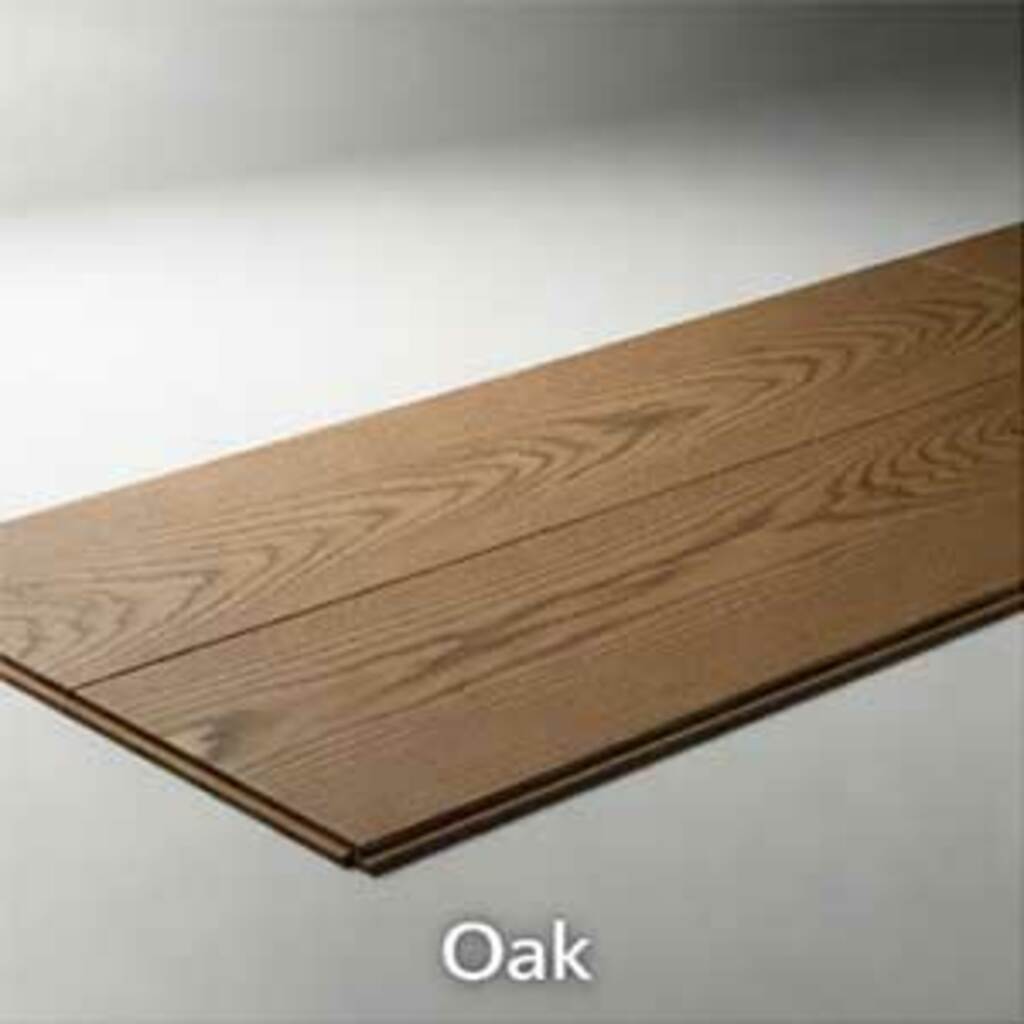 European Oak dominates the wood flooring species market, and it earns that position on merit rather than familiarity. With a Janka rating of 1,360, it sits in the sweet spot between hardness and workability. It takes floor lacquers, hardwax oils, and stains extremely well, giving you a wider range of finished appearances than almost any other species. Graded in categories from rustic to prime, it suits everything from farmhouse kitchens to contemporary living spaces.
- Appearance: Warm mid-brown tones, prominent ray fleck, variable grain depending on cut
- Colour change: Mellows to a golden honey tone over several years
- Maintenance: Oils require periodic re-application; lacquered boards are lower maintenance day-to-day
- Best for: Almost any room — living rooms, hallways, bedrooms, open-plan spaces
- Price range: £25–£80/m² depending on grade, thickness, and finish
If you're uncertain which species to choose, European Oak is rarely the wrong answer. The supply chain is well established, fitters are familiar with it, and replacement boards are easy to source years down the line.
American Walnut — Premium Looks, Premium Price
 American Walnut delivers a rich, dark chocolate brown that no stain on cheaper timber can convincingly replicate. It's the go-to species for high-end residential projects where appearance takes priority. However, at a Janka rating of 1,010, it's noticeably softer than Oak — small dents and scratches will appear over time, particularly in high-traffic areas.
- Appearance: Deep brown with purple-grey undertones - straight to slightly wavy grain
- Colour change: Lightens with UV exposure, losing some of its initial depth
- Maintenance: Benefits from an oil finish to preserve the natural colour, avoid harsh cleaning products
- Best for: Master bedrooms, studies, dining rooms — lower-traffic areas where appearance is prioritised
- Price range: £50–£110/m²
The higher price reflects both the premium nature of the timber and the fact that it's imported from North America. If the budget is tight, consider an engineered construction to reduce cost whilst retaining the genuine walnut surface layer.
Ash — Hard, Light, and Often Overlooked
 Ash is one of the hardest commercial hardwoods readily available in the UK, with a Janka rating of 1,320 — close to Oak. Its pale, almost white-blonde colouring suits Scandinavian and contemporary interiors, and its pronounced, open grain gives it strong visual character. It's a practical choice that's frequently underestimated.
- Appearance: Very light, creamy colour with a bold, open grain pattern
- Colour change: Yellows slightly with age and UV exposure
- Maintenance: Open grain can trap dirt; regular vacuuming and periodic oiling are recommended
- Best for: Contemporary and Scandi-style interiors; active households needing hardness
- Price range: £35–£75/m²
One practical note: Ash's open grain makes it slightly less forgiving with moisture than Oak, so take particular care with acclimatisation before fitting and maintain consistent indoor humidity levels.
Hard Maple — Maximum Durability
 Hard Maple sits near the top of the hardness scale at 1,450 Janka — harder than Oak, Ash, and Walnut. It's the species of choice for commercial spaces, gym floors, and bowling alleys, which tells you everything about its durability credentials. For homeowners with heavy foot traffic or active households, it's a serious option.
- Appearance: Very pale, almost white; fine, subtle grain with occasional mineral streaks
- Colour change: Yellows noticeably with UV exposure over time
- Maintenance: Resistant to staining, but its density makes it harder to refinish; lacquer finish is most common
- Best for: Hallways, kitchens, busy family homes, home gyms
- Price range: £45–£90/m²
Hard Maple's density is also its main drawback — it can feel cold and hard underfoot, and its pale colour means yellowing becomes obvious. It's also more difficult to sand back and refinish than softer species.
American Cherry — Character Over Durability
American Cherry is the most visually distinctive species on this list, with a warm pinkish-red tone that deepens dramatically with light exposure. Within a few months of fitting, it transitions from pale salmon-pink to a rich reddish-brown. That transformation is either its most compelling feature or its biggest drawback, depending on your expectations.
With a Janka rating of around 950, Cherry is on the softer end of hardwood options. It will dent and scratch more readily than Oak or Maple. This is not a species for hallways or kitchens with heavy use. However, in the right setting — a formal dining room, a library, a low-traffic bedroom — it produces a floor of genuine distinction.

Strand-Woven Bamboo — The Hardness Outlier
Technically, a grass rather than a timber, strand-woven bamboo is worth including in any serious wood flooring species comparison. The manufacturing process — compressing shredded bamboo fibres under extreme heat and pressure with resins — produces a flooring material that is dramatically harder than most traditional hardwoods. With Janka ratings often exceeding 3,000 lbf, strand-woven bamboo is one of the most dent-resistant flooring options available for residential use.
- Appearance: Fine, uniform grain with colour variations depending on carbonisation and finishing
- Colour change: Generally stable, though darker carbonised bamboo can lighten slightly over time
- Maintenance: Durable surface but sensitive to excess moisture; proper sealing and cleaning are essential
- Best for: Busy households, kitchens, hallways, and areas with heavy daily foot traffic
- Price range: £30–£60/m²
While extremely durable, the quality of bamboo flooring varies significantly between manufacturers. Always check density, board construction, and certification to ensure the product meets proper performance standards.
Key Takeaways When Choosing a Wood Flooring Species
- European Oak remains the most versatile option thanks to its balanced hardness, stability, and ability to accept a wide range of finishes and stains.
- Harder species suit busy homes — Maple, Ash, and strand-woven bamboo perform well in hallways, kitchens, and other high-traffic areas.
- Softer decorative species require careful placement — Walnut and Cherry are better suited to bedrooms, dining rooms, or lower-traffic living spaces.
- Colour change over time is normal — many species darken, lighten, or warm in tone with UV exposure, so consider how the floor will look several years after installation.
- The best species is the one that matches how the room is used — durability, maintenance, and appearance should all be balanced, rather than choosing purely on colour or trend.
Ultimately, the right wood flooring species is the one that fits both your lifestyle and your interior design goals. By understanding hardness, stability, and long-term appearance, you can choose a floor that not only looks beautiful on installation day but continues performing well for decades.