Best Flooring for Bathrooms: Waterproof, Safe, and Stylish Options
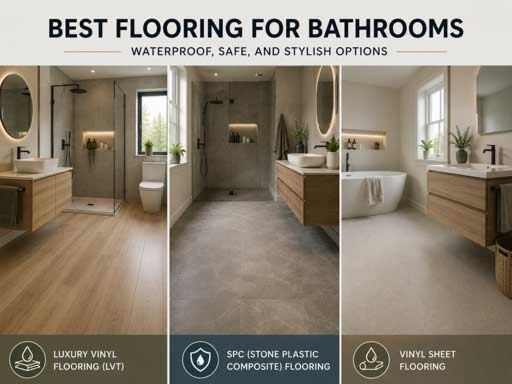
The best flooring for most bathrooms is waterproof SPC or LVT vinyl. Both handle splashes, steam and standing water without warping, they're warmer and softer underfoot than hard floors, and they come in textured, slip-resistant finishes and in wood, stone and tile-effect designs.
A bathroom floor has to cope with moisture, humidity and wet feet while staying hygienic, safe and good-looking, so solid wood, engineered wood, laminate and carpet are best kept out.
This guide covers the best options, how to choose a non-slip floor, what suits small bathrooms, wet rooms and older users, and how to fit and seal the floor properly.
| If you want... | Choose |
|---|
| The best all-round bathroom floor | SPC |
| A softer, warmer feel underfoot | Rigid-core LVT |
| A safer floor for children or older people | A textured SPC or LVT with a stated slip rating |
| The look of tiles without the cold, hard feel | Tile-effect SPC or LVT |
| A wood look in a wet room | Wood-effect SPC or LVT, not real wood |
| A small bathroom, en suite or cloakroom | A light-toned SPC or LVT in long planks or large tile-effect formats |
What makes a good bathroom floor?
A bathroom floor has to meet higher demands than floors elsewhere in the home. These are the features to look for:
- Waterproof: the floor must resist standing water and high humidity without damage.
- Slip resistance: a safe surface matters in a wet room, especially for children and older people.
- Easy to clean: it should wipe clean and not support mould or mildew, with good ventilation in the room.
- Durable: it needs to resist wear, scratches and dents from daily use.
- Good-looking: a design that suits your bathroom, whether modern, minimal or traditional.
The best flooring for bathrooms
SPC (stone plastic composite) flooring
SPC is our top pick for bathrooms. It's a rigid-core vinyl that's fully waterproof, with a dense core that resists warping, temperature changes and humidity. That stability suits family bathrooms and rooms with underfloor heating, and it handles a slightly imperfect subfloor better than a flexible floor.
- Waterproof, rigid and extremely stable.
- Resists temperature changes and humidity.
- Good for busy family bathrooms and shower rooms.
- Natural stone, timber and tile-effect finishes.
Luxury vinyl tile (LVT)
LVT is another excellent all-round choice. It's softer and warmer underfoot than hard, cold floors, scratch- and stain-resistant, and available in a wide range of wood, stone and abstract designs. Flexible standard-core LVT is water-resistant rather than fully waterproof, so for a bathroom choose a rigid-core product or SPC, or a glue-down LVT fitted with sealed edges. Our guide to how LVT and SPC are built explains the difference.
- Waterproof vinyl that copes with humidity when you choose the right core.
- Comfortable underfoot and warmer than hard floors.
- Scratch- and stain-resistant surface.
- Wood, tile and abstract designs.
Explore our full range of LVT and SPC flooring for bathrooms, and see our guide to the best rooms for LVT and SPC flooring.
What is the best non-slip bathroom flooring?
No floor is slip-proof when it's wet and soapy, but you can choose one that's far safer. Look for:
- A textured or embossed surface, which gives more grip than a smooth, glossy one.
- A stated slip rating in the product specification. Common benchmarks are R10 or higher under DIN 51130, or a pendulum test value of 36 or more under BS 7976, which indicates low slip potential.
- A matt finish, which also hides water marks better than gloss.
- A regular cleaning routine, because soap film and residue make any floor slippery. Our guide to cleaning and maintaining LVT and SPC floors has the routine.
Slip resistance varies by product, so check the specification and ask us if it isn't listed.
Bathroom flooring for older people and accessibility
- Choose a textured, slip-rated floor with a matt finish, and avoid loose mats that can catch feet.
- A warmer, slightly softer surface such as LVT is kinder on joints than a cold, hard floor.
- Keep the floor level where it meets the next room, using low-profile thresholds and edgings, so there's no trip hazard.
- Use a floor colour that contrasts with the walls and fittings, so the edges of the room are easy to see.
- Consider underfloor heating to keep the room warm. Our guide to using LVT or SPC flooring with underfloor heating covers it.
The best flooring for small bathrooms, en suites and cloakrooms
In a compact room, the floor can make the space feel bigger. Light tones such as beige, soft grey or whitewashed wood open up a small bathroom, and long planks or large tile-effect formats mean fewer joins and a cleaner look. Carrying the same floor into an adjoining room makes both feel larger. Thin vinyl floors add little height, which helps with door clearance in a small room.
Flooring for wet rooms and shower rooms
A true wet room needs more than the right floor covering. The shower area needs a properly waterproofed, sloping base with a drain, installed by a qualified fitter. LVT and SPC suit the surrounding area, and for any zone with standing water, use a glue-down vinyl system with sealed joints that the maker approves for wet rooms. Keep click floors to the drier parts of the room, and always follow the manufacturer's wet room instructions.
How to fit and seal a bathroom floor
- Start with a flat, clean, dry subfloor, levelling any dips first.
- Choose click-fit for the quickest, easiest install, or glue-down for a fully bonded floor with sealed edges.
- Leave the expansion gap the maker specifies around the edges, then cover it with scotia or a trim.
- Seal the gaps around the bath, shower tray, toilet base and any pipes with a flexible sealant, so water can't get underneath.
- Cut neatly around the toilet and fittings, and undercut door frames for a clean finish.
Our range of coloured silicones and mastics and scotia and quadrant beading covers the finishing details. If you'd rather leave it to the professionals, our floor fitting service covers London.
What to avoid in bathroom flooring
Some floors that work well elsewhere in the home cause serious problems in a bathroom. Excess moisture, humidity and pooling water make them unsuitable for long-term use.
- Solid wood is highly vulnerable to water, and even small amounts of moisture can make it warp, swell or crack over time.
- Engineered wood is more stable than solid wood but isn't waterproof, so it's not suited to a bathroom that sees regular moisture.
- Laminate, even water-resistant laminate, can absorb water through the seams, which swells and damages the core. It isn't waterproof, so we don't recommend it in bathrooms.
- Carpet holds moisture, which leads to mould, mildew and odours, and it's hard to keep clean in a wet area.
Choose a floor that's explicitly rated as waterproof for bathroom use. It's cheaper to get it right the first time than to replace a damaged floor.
Bathroom flooring design tips
- Use lighter colours to open up small spaces.
- Match or complement your floor with the wall colours or fittings, for a cohesive look or a deliberate contrast.
- Choose textured finishes for safety and a more natural look.
- Create a spa feel with earthy tones and warm wood effects.
- Try long planks or large tile-effect formats for a modern look and a sense of space.
Whether you prefer a clean, minimal style or a bold statement, our collection includes designs from marble and stone effects to rustic timber looks.
If you're planning a bathroom renovation or replacing an old floor, our team can help you choose between SPC and LVT based on your space, budget and design, and you can order up to three free samples to see the floors in your own bathroom. Call us on 020 8830 9787 or contact us online to speak with a specialist.
Frequently Asked Questions about Bathroom Flooring
What is the best flooring for a bathroom?
For most bathrooms, waterproof SPC or LVT is the best choice. Both are comfortable, easy to clean and available in textured, slip-resistant finishes.
What is the best waterproof flooring for a bathroom?
SPC is the most dependable because its rigid core doesn't absorb water. Rigid-core LVT is also fully waterproof.
What is the best non-slip flooring for a bathroom?
A textured, matt SPC or LVT with a stated slip rating. Check the product specification, because slip resistance varies between ranges.
Can you put laminate flooring in a bathroom?
We don't recommend it. Even water-resistant laminate isn't waterproof, and water in the seams can swell the core. Wood-effect SPC or LVT is a safer choice.
Can you have a wood-look floor in a bathroom?
Yes, with wood-effect SPC or LVT, which gives the look of timber with a waterproof surface. Real wood and engineered wood aren't suitable.
What is the best flooring for a wet room?
A waterproofed, sloping base, with a glue-down vinyl system approved for wet rooms in any area with standing water. SPC and LVT suit the surrounding floor, subject to the maker's instructions.
What is the easiest bathroom flooring to install?
Click-fit SPC or LVT. It floats over a flat, dry subfloor without adhesive, but you still need to seal the edges around the bath, shower and toilet.
Is vinyl flooring good for bathrooms?
Yes. Waterproof vinyl in the form of SPC and rigid-core LVT is one of the best bathroom floors because it's warm, comfortable, low-maintenance and available in non-slip finishes.