Choosing the Right Underlay for LVT Flooring
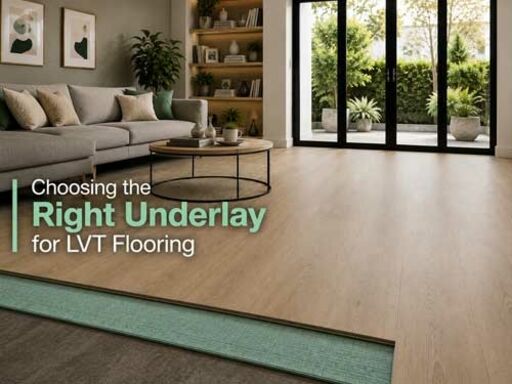
Luxury vinyl tile and plank flooring has become the default choice for kitchens, bathrooms, and busy family rooms across the country. It is waterproof, hard-wearing, and available in a wide range of looks. But the underlay question trips up a surprising number of buyers — and getting it wrong can cause problems that are expensive to fix.
This guide cuts through the marketing and explains what actually matters when selecting underlay for LVT flooring.
Does LVT Actually Need Underlay?
The honest answer is: it depends on the product.
Many LVT planks and tiles come with an underlay already attached to the back of each board. This pre-attached layer is typically 0.5mm to 1.5mm of foam or felt. It is there to provide basic cushioning and to help the click-lock joints function smoothly. In most cases, you should not add a separate underlay on top of a pre-attached one — doing so can cause the click joints to flex too much and eventually fail.
If your LVT does not have a pre-attached underlay, or if you are gluing the floor directly to the subfloor, then underlay becomes a separate decision. Here is how to approach it.
Types of Underlay for LVT
Foam Underlay
Standard foam underlays are cheap and widely available, but they are not always appropriate for LVT. LVT is a rigid or semi-rigid product, and it needs a flat, firm base. A soft, compressible foam underlay can cause the floor to dip and flex under load, which puts stress on the joints and can cause them to separate over time. If you are using foam, choose a high-density foam with minimal compression — typically rated at 3mm or less compression under load.
Cork Underlay
Cork offers good thermal and acoustic properties and compresses very little under load, making it a better choice under LVT than standard foam. It is also naturally resistant to mould and compression creep. The main limitation is cost — cork underlays are more expensive than foam.
Felt or Fibre Underlay
Felt and fibre underlays are firm, stable, and well-suited to LVT. They absorb impact noise effectively without causing the floor to flex. Some felt underlays also have a built-in vapour barrier on the underside, which can be useful over concrete subfloors where moisture is a consideration.
Specialist LVT Underlay
Some manufacturers now produce underlay specifically designed for rigid LVT and SPC flooring. These are typically thin (1–1.5mm), extremely firm, and include a built-in acoustic layer. They are the most reliable choice if you want to be certain the underlay will perform correctly with your specific LVT product.
Underlay Over Underfloor Heating
LVT is one of the better floor types to use over underfloor heating, because it has a low thermal resistance. But the underlay can undermine this if you are not careful.
- Choose an underlay with a combined Tog rating (floor plus underlay) of no more than 0.15 Tog per 10mm
- Avoid thick foam underlays over UFH — they insulate the floor and reduce heating efficiency
- Many specialist LVT underlays are specifically rated for use over underfloor heating — check the product datasheet
- Some LVT manufacturers will void the warranty if the wrong underlay is used over UFH, so read the installation guidelines carefully
Moisture and Vapour Barriers
LVT itself is waterproof, but moisture rising from below can still cause problems. On concrete ground floors, a vapour barrier is essential unless one has already been installed in the slab. Many LVT-specific underlays include an integrated vapour barrier, typically a polythene layer on the underside. Check the specification carefully — a vapour barrier is not the same as a standard underlay backing.
On timber subfloors above a well-ventilated void, a vapour barrier is generally not required, and in some cases can actually trap moisture in the timber. In these situations, choose an underlay without a vapour barrier.
Acoustic Performance
If you are in a flat or installing LVT on an upper floor, impact sound transmission is worth thinking about. LVT is a hard surface that transmits impact noise (footsteps, dropped items) more readily than carpet. A good underlay can reduce this significantly.
Look for an underlay with an impact sound reduction rating of at least 15dB. Some specialist acoustic underlays for hard floors can achieve 20dB or more. This matters particularly in properties where building regulations require minimum acoustic standards, or where you simply do not want the people below you to hear every footstep.
Subfloor Flatness
Underlay is not a substitute for proper subfloor preparation. LVT is unforgiving over uneven subfloors — any high spots, dips, or ridges will eventually telegraph through the floor as it is walked on. The standard tolerance is 3mm over a 1.8-metre straight edge, though some LVT manufacturers specify tighter tolerances.
A thin, firm underlay over a well-prepared subfloor will perform better than a thick, soft underlay trying to compensate for a poor surface. Fix the subfloor first, then choose the underlay.
What to Avoid
- Do not add a separate underlay under LVT that already has underlay pre-attached
- Do not use a thick, soft foam underlay — it causes joint failure over time
- Do not use a vapour barrier underlay on a timber floor above a ventilated void
- Do not assume all underlays are suitable for underfloor heating — check the Tog rating
- Do not use an underlay that is thicker than 3mm with most click-lock LVT systems
A Practical Summary
For most floating LVT installations without pre-attached underlay, a specialist LVT underlay of 1–1.5mm thickness is the safest choice. It will be firm enough to support the click joints, thin enough not to cause flexing problems, and likely to be rated for underfloor heating if that is relevant.
If you are gluing LVT directly to the subfloor, no separate underlay is needed. Ensure the adhesive is appropriate for the product and that the subfloor is clean, flat, and dry before you begin.
Ask the LVT manufacturer which underlays they approve. If a problem develops later, having installed a manufacturer-approved underlay means your warranty claim has a much better chance of being honoured.