Best Flooring for Kitchens: Practical, Stylish & Waterproof Options
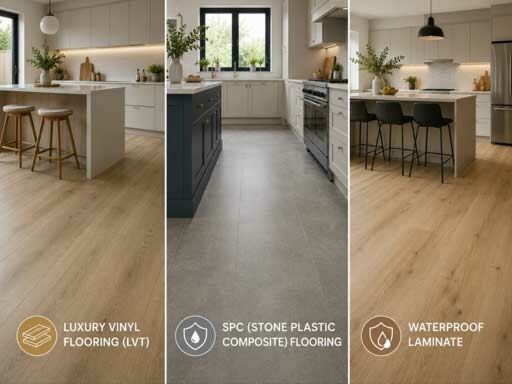
For most UK kitchens, the best flooring is waterproof vinyl, either SPC or LVT. Both cope with spills and splashes, wipe clean easily and come in convincing wood and stone looks. SPC has a rigid core and is the tougher, more stable pick, while LVT is softer and warmer underfoot.
Kitchens are hard on floors, with water, dropped pans, heavy foot traffic and food stains, so a kitchen floor has to be strong, water-resistant and easy to clean as well as good-looking.
This guide compares the main options, explains what waterproof really means and covers what to avoid. Every floor mentioned is available to order or sample in our kitchen flooring range.
| If you want... | Choose | Why |
|---|
| The best all-rounder | SPC | Rigid, fully waterproof and stable |
| The softest, warmest feel underfoot | LVT | A slightly cushioned feel that's kinder on your legs at the hob |
| The best budget wood look | Waterproof laminate | Wood effect with a water-resistant core, as long as it's rated for kitchens |
| Real wood character | Engineered wood | Needs a protective finish and prompt spill clean-up |
| A floor for a busy family or pets | SPC or LVT with a thicker wear layer | A 0.5mm or thicker wear layer is rated for very heavy domestic use |
| An uneven subfloor | SPC | Rigid boards bridge minor imperfections, though big dips still need levelling |
| Underfloor heating | SPC or LVT | Check the maximum surface temperature for your product, typically 27°C |
Kitchen flooring types compared
Here's how the most common kitchen floors compare.
| Flooring type | Waterproofing | Durability | Comfort underfoot | Underfloor heating | Best for |
|---|
| LVT | Waterproof vinyl, but check the core and joints | Very good | Soft and warm | Check the product specification | Family kitchens, comfort |
| SPC | Fully waterproof | Excellent | Firmer, stable | Check the product specification | Busy kitchens, heavy use |
| Waterproof laminate | Water-resistant core | Good | Firm | Check the product specification | Budget-conscious wood looks |
| Engineered wood | Not waterproof | Good with care | Warm, natural | Check the product specification | Real wood character |
| Ceramic tile | Waterproof (grout needs care) | Very hard-wearing | Cold and hard | Suitable | Traditional looks |
Ceramic and porcelain tile are classic kitchen choices, and they cope well with water. The trade-offs are that they're cold and hard underfoot, dropped glass rarely survives and grout lines need regular cleaning. If you like the stone or tile look without those drawbacks, stone-effect SPC and LVT tiles are well worth a look. They're warmer, softer and quicker to install. You may also see sheet vinyl, linoleum, poured resin and sealed cork recommended for kitchens. We don't stock those, so this guide sticks to the floors we supply.
The best kitchen flooring options in detail
Luxury vinyl tile (LVT)
LVT is one of the most popular kitchen floors today. It combines the look of wood or stone with a waterproof vinyl surface, and it's soft underfoot, which makes a real difference if you spend long stretches standing at the hob.
- Vinyl doesn't absorb water, so spills and splashes won't swell the planks.
- It's easy to clean with a mop or damp cloth.
- It has a warm, cushioned feel underfoot.
- A 0.3mm wear layer is the standard domestic spec and suits most kitchens, and 0.5mm or more is better for very heavy use.
The one thing to check is the core. Flexible standard-core LVT is water-resistant rather than fully waterproof, so if the floor will sit next to a sink or dishwasher, choose a rigid-core product or SPC. Our guide to how LVT and SPC are built explains the differences, and you can browse the full range of luxury vinyl flooring here.
SPC (stone plastic composite)
SPC is a rigid-core vinyl that's extremely tough and stable. It has all the waterproof benefits of vinyl, and its dense core makes it a strong fit for heavy-use areas like kitchens and for homes with underfloor heating. If you want to understand how it differs from standard vinyl before you buy, our LVT, SPC and vinyl flooring guide covers the construction and fitting options.
- The rigid core resists dents and scratches.
- It's fully waterproof and easy to install.
- It comes in realistic wood and stone looks.
- Most ranges suit underfloor heating, but always check the product specification.
Waterproof laminate
Modern waterproof laminate offers good moisture resistance and a realistic wood look. It's more affordable than solid or engineered wood and relatively simple to install, and the answer to "can you have laminate in a kitchen?" is yes, provided you choose a product designed for it. It suits open-plan kitchen-living areas well. Look for a high abrasion class (AC4 or above is a sensible target for a busy kitchen) as well as a water-resistant rating, and browse our laminate flooring suitable for kitchens.
Engineered wood
Engineered wood is the only real wood we'd consider for a kitchen. Its layered core is more stable than solid timber, so it copes better with the temperature and humidity changes in a kitchen. It still isn't waterproof, so choose a protective finish, wipe spills up straight away and think twice about fitting it right beside the sink or dishwasher. Check the specification if you have underfloor heating. You can see the full range of engineered wood flooring here.
What does waterproof really mean for kitchen flooring?
Not every floor sold as waterproof behaves the same way, so it's worth knowing the difference before you buy. Waterproof flooring, such as SPC and rigid-core LVT, has a core that doesn't absorb water, so a spilled drink or a leaking dishwasher won't make the planks swell or warp. Water-resistant flooring, such as most waterproof laminate, has a core and surface treated to hold off moisture for a limited time. It copes happily with everyday spills, but standing water shouldn't be left on it.
Even a fully waterproof floor can let water travel through the joints and settle underneath if a spill goes unnoticed for long enough. A few habits make a big difference:
- Wipe up large spills promptly, especially around the sink, dishwasher and fridge.
- Keep an eye on the edges and any trims where the floor meets the units.
- Use a flexible seal where the floor meets any area likely to get wet.
For most kitchens, SPC and rigid-core LVT are the best waterproof flooring choices, with waterproof laminate a good budget alternative where spills are an occasional nuisance rather than a daily event.
Most durable and easy-to-clean kitchen flooring
A kitchen floor takes more punishment than almost any other surface in the house: dragged chairs, dropped pans, grit carried in on shoes and endless mopping. These are the features that matter for a hard-wearing floor:
- A thick, good-quality wear layer on vinyl, which protects the pattern from scuffs and scratches. It's also the best protection against pet claws.
- A rigid core, which is why SPC handles dents and heavy furniture so well.
- A high abrasion rating on laminate, which tells you how well the surface resists wear.
- A textured or matt surface, which hides marks better than a high gloss.
For easy cleaning, vinyl is hard to beat. A vacuum or soft brush for loose dirt and a damp mop for everything else will keep SPC and LVT looking fresh, and our guide on how to clean and maintain LVT and SPC floors has the full routine. Avoid soaking any floor, avoid harsh abrasive cleaners and wipe grease up straight away so it doesn't get trodden in. An entrance mat at the back door traps grit before it reaches the floor. If low maintenance is your priority, choose a smooth, sealed surface with as few grooves and joints as possible.
What to avoid in kitchen flooring
Many materials can work in kitchens, but some are best avoided because of low moisture resistance or high maintenance. The wrong floor can lead to warping, staining or early replacement.
- Solid wood flooring is beautiful but highly sensitive to moisture and temperature changes. It can swell, warp or crack when exposed to water or humidity.
- Standard laminate that isn't specifically water-resistant lets spills seep through the seams, which swells and damages the core.
- Carpet absorbs liquids and food particles, which makes it hard to keep clean and hygienic in a kitchen.
- Unsealed cork is soft and warm underfoot but absorbs moisture easily. If you choose cork, make sure it's properly sealed for kitchen use.
Always check the product specification to confirm a floor is rated for kitchen use before you decide.
Kitchen flooring design tips
Beyond performance, your kitchen floor sets the visual tone of the space and should work with your cabinets, worktops and wall colours.
- In small kitchens, lighter tones make the space feel larger and brighter. In bigger kitchens or open-plan areas, darker tones add warmth and depth.
- Matt finishes hide dirt and scratches better than glossy ones, and embossed or textured finishes add grip underfoot.
- Wood-look vinyl or laminate gives you the charm of natural wood with the practical benefits of waterproof materials.
If you want style and performance together, our LVT and SPC ranges are an excellent starting point.
Flooring for open-plan kitchens, dining rooms and bathrooms
Many UK homes now have a kitchen that flows straight into a dining or living area. It usually makes sense to use one continuous floor across the whole space, because it makes the room feel larger, removes awkward transitions and gives you one consistent look. Waterproof SPC and LVT are the natural choice for a kitchen-diner, because they cope with kitchen spills while still looking at home in a living room. If your kitchen opens onto a hallway, you can carry the same floor through, ideally with a slightly textured surface on the busiest routes.
The same logic applies if you're updating a kitchen and bathroom together. Waterproof vinyl works in both rooms, so you can match them or pick complementary shades without worrying about moisture. Our guide to the best bathroom flooring covers the bathroom side.
Fitting your kitchen floor
A few practical points can save you trouble on installation day.
- Click-together floors (most SPC, LVT and laminate) float and need room to expand and contract, so they're normally fitted after the kitchen units rather than underneath them. Click floors are also the quickest and easiest to fit.
- Glue-down vinyl gives the most stable long-term result, especially in large open-plan spaces, but it needs a flat, moisture-checked subfloor.
- A rigid SPC board is more forgiving of minor imperfections than thin, flexible vinyl, but large dips or humps should be levelled first.
- Many floors come with an attached underlay, while others need a separate one. Check what the product needs before you order, and see our guide to choosing the right underlay for LVT flooring.
- Finishing details around doorways, units and appliances make a real difference to how professional the floor looks.
Most of what you need for the job is available in one place, from underlay and insulation and levelling and damp proofing products to thresholds and edgings for a neat finish at doorways. If you'd rather leave it to the professionals, our floor fitting service covers London.
Frequently Asked Questions about Kitchen Flooring
What is the best flooring for a kitchen?
For most kitchens, waterproof SPC or LVT is the best choice. Both handle spills, wipe clean easily and come in a wide range of wood and stone looks.
What is the best waterproof flooring for a kitchen?
SPC is the best waterproof choice because its rigid core doesn't absorb water. Rigid-core LVT is also fully waterproof, and waterproof laminate is a good budget alternative where spills are occasional.
Is laminate flooring good for kitchens?
Yes, as long as it's a waterproof or water-resistant laminate designed for kitchen use. Standard laminate can swell if water seeps into the joints.
Is SPC flooring good for kitchens?
Yes. SPC is rigid, fully waterproof and very durable, which is why it suits busy kitchens so well. Check the product specification to confirm it's suitable for your underfloor heating system.
What's the most durable kitchen flooring?
Rigid-core SPC and good-quality LVT with a thick wear layer are among the most durable options. A high-rated laminate is a solid alternative.
Can I put wood flooring in a kitchen?
Engineered wood can work with a protective finish and careful maintenance. Solid wood isn't recommended because it reacts badly to moisture.
What is the best kitchen flooring with underfloor heating?
SPC and LVT both suit underfloor heating because they conduct heat well. Always check the maximum surface temperature for your product, which is typically 27°C, and confirm it suits your heating system.
What is the easiest kitchen flooring to install?
Click-together SPC, LVT and laminate are the easiest, because they float over the subfloor without adhesive. They still need a flat base and the right underlay.
Do you fit the floor before or after the kitchen units?
For floating floors, it's usually best to fit the floor after the units so it has space to expand. Your fitter can advise on the best approach for your layout.
What's the best kitchen flooring for an uneven floor?
A rigid SPC floor copes best with minor imperfections, though larger dips should be levelled before fitting.
Need help choosing the best kitchen floor?
Whether you're after something waterproof, stylish, budget-friendly or all three, our team can help you compare materials, understand installation options and choose accessories like underlay and trims. Explore our kitchen flooring range online, order up to three free samples, or visit our London showroom to see the products in person.
Call us on 020 8830 9787 or contact us online to speak with a flooring specialist.