Best Wooden Flooring for Pet Owners
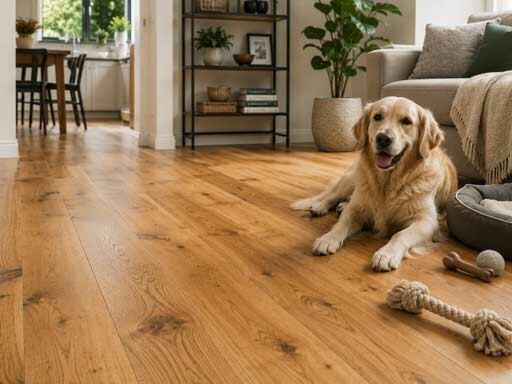
Nearly 60% of British adults own a dog, and many of them have more than one four-legged bundle of joy tearing around the house. With that in mind, it’s no wonder that the demand for wooden flooring in pet-friendly homes keeps rising. Real wood isn’t just stylish—it’s also eco-friendly, durable, hygienic, and built to withstand the daily chaos of paws, claws, and the occasional muddy sprint through the living room.
Wood flooring isn’t only practical; it’s also timelessly beautiful. It can adapt to any interior style, from modern minimalism to cosy farmhouse chic. Better yet, it’s easy to clean (goodbye endless vacuuming) and can be sanded and refinished multiple times, restoring it to its original glory—even after years of zoomies and claw marks.
If you’re a proud pet parent wondering whether wood floors can survive your furry tornado, the answer is a big yes. In this guide, we’ll share tips on how to choose the best pet-friendly wooden flooring, and how to keep it looking fantastic while making sure both your family and your pets are happy and comfortable.
Choose Naturally Harder Wood Species Instead of Evergreens
If you share your home with dogs or cats, forget about softwood floors like pine, birch, or walnut. They may look gorgeous, but in a pet-friendly home, they’ll show scratches faster than your pet can say “walkies.” Softer woods simply can’t handle the daily marathon of paws and claws without picking up battle scars along the way.
The good news? You don’t have to sacrifice style for durability. Hardwood species like oak, Brazilian cherry, and ash are highly recommended by flooring professionals. These tougher woods are far more resistant to scratches and scuffs, meaning you’ll spend less time worrying about nail marks and more time enjoying your furry friend’s company. Plus, with the huge variety of wood species and finishes available, you’ll almost certainly find a harder option that looks just as stunning as any softer alternative.
In short: the harder the wood, the less likely your floor will end up looking like a scratching post. Choose wisely, and your flooring will stay beautiful even in a home full of zoomies.
Choose Flooring with a Distinctive Natural Texture
Here’s a little design trick every pet owner will love: the more texture your wooden floor has, the better it hides the everyday “gifts” left behind by paws and claws. Take white oak, for example—its naturally rich grain pattern doesn’t just look stunning, it also does a brilliant job at camouflaging scuffs, scratches, and the occasional stain.
Let’s face it: if you’ve got pets, scratches are inevitable. But when you choose a floor with character—visible grain, knots, or a brushed finish—those scratches don’t stand out like sore thumbs. Instead, they blend in and become part of the floor’s charm. Think of it as your dog or cat adding their own “signature” to the design, without ruining the overall look.
So if you’re aiming for a floor that stays beautiful even with pets in the house, go for one with plenty of natural texture. It’s practical, stylish, and just a little forgiving when your furry friends forget to trim their nails.
Choose a Distinctive Man-Made Texture
Yes, your wood floor is made of real timber—but that doesn’t mean you’re stuck with its natural look. Thanks to modern finishing techniques, you can give your floor a little extra character. From wire-brushed textures that highlight the grain to hand-scraped effects that create a rustic vibe, there are plenty of ways to add depth and disguise everyday wear. Some techniques are bold and dramatic, while others simply enhance the wood’s natural beauty.
If you live with pets (or just a lot of foot traffic), a textured surface is your secret weapon. A perfectly smooth, polished floor might look sleek at first, but it’s also unforgiving. Even the tiniest scratch from a dog’s claw or cat’s sprint will stand out like neon lights on a dark street. By contrast, textured surfaces help scratches blend in, keeping your floor looking good for longer without constant refinishing.
In short: if you don’t want to spend your weekends panicking over paw prints and nail marks, give your floor a man-made texture. It’s practical, stylish, and far more pet-proof than a mirror-smooth finish.
Choose Natural Colours
Want to spend less time chasing tufts of fur with the hoover? Then think carefully about colour. Natural wood tones—light and dark browns, warm beiges, soft yellows, or even rich reddish hues—are far more forgiving in homes with pets. Why? Because during shedding season (a.k.a. every season if you own a Labrador), these shades do a brilliant job at disguising pet hair on the floor.
Go too light, like a whitewashed floor, and dark hair will stand out. Go too dark, and light hair will make it look like tumbleweeds rolling through your living room. Sticking with natural, mid-range colours helps keep pet hair camouflaged, meaning you can get away with vacuuming slightly less often without your visitors noticing. (Your secret’s safe with us.)
So if you’re picking a pet-friendly floor, remember: natural colours aren’t just timeless and beautiful—they’re also your ally in the ongoing battle against shedding.
Choose a Matt Finish
Glossy floors may look glamorous, but in a home with pets they’re about as practical as a white sofa in a puppy training class. Every scratch, paw print, and speck of dust is going to show. Instead, opt for a matt finish. It’s far better at disguising scratches, scuffs, and the inevitable bits of fur and dirt that come with sharing your space with four paws.
Waxed or oiled finishes are especially good choices for pet-friendly households. They don’t just sit on top of the wood like a shiny film—they penetrate the grain, adding strength and protection from within while keeping the surface looking natural. The bonus? Oil finishes are less slippery than gloss, giving your pets a safer and more comfortable surface to run, slide, and snooze on.
So, while glossy floors might belong in showrooms, matt finishes belong in real homes—the kind where dogs zoom down hallways and cats think the floor is part of their personal racetrack.
Conclusion: Pet-Friendly Floors That Keep Everyone Happy
Sharing your home with pets doesn’t mean you have to give up on the dream of beautiful wooden flooring. With the right choices—harder wood species, textured surfaces, natural colours, and a practical matt finish—you can enjoy floors that look stunning and stand up to paws, claws, and the occasional “oops” moment. Add in the fact that wooden floors are easy to clean, long-lasting, and can be restored through sanding and refinishing, and you’ve got a surface that truly works for the whole family—two-legged and four-legged alike.
At the end of the day, your floors should make life easier, not harder. Choose wisely, and you’ll have a home that feels warm, stylish, and pet-friendly all at once. Because let’s be honest—life’s better with pets, and floors that can keep up with them.
FAQs About Wooden Flooring and Pets
Are wooden floors safe for pets?
Yes! Wooden floors are perfectly safe for pets. In fact, they’re more hygienic than carpets because they don’t trap pet hair, dander, or odours. Just be sure to choose a durable finish to protect against scratches and accidents.
Do dogs scratch hardwood floors?
Dogs can leave scratches, especially on softer woods. That’s why harder species like oak, ash, or Brazilian cherry are better choices for pet-friendly homes. Keeping your dog’s nails trimmed also helps reduce wear and tear.
What’s the best wood finish if I have pets?
A matt finish with oil or wax is best. It hides scratches and scuffs more effectively than a glossy finish and provides extra protection by soaking into the wood grain. Oil finishes are also less slippery, which your pets will thank you for.
Which wood colours are best for hiding pet hair?
Natural tones—browns, beiges, warm yellows, and reddish shades—help camouflage pet hair during shedding season. Avoid extreme colours like whitewashed or very dark wood, as they’ll make every strand stand out.
Can wooden floors be restored if my pets damage them?
Absolutely. One of the biggest advantages of wood flooring is that it can be sanded and refinished multiple times throughout its life. Scratches, stains, and wear can often be erased, leaving your floor looking as good as new.