How to Clean and Maintain LVT & SPC Floors
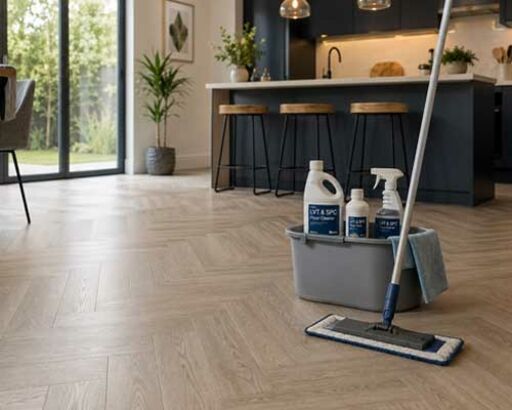
To clean LVT and SPC flooring, sweep or vacuum it regularly, then damp mop once a week with a pH-neutral vinyl floor cleaner and a microfibre mop. Keep steam mops, bleach, wax and abrasive pads away from it. LVT (luxury vinyl tile) has a flexible multi-layer construction, while SPC (stone plastic composite) has a rigid stone-plastic core, but both have a clear wear layer on top, and that wear layer is what you're protecting. This guide covers the daily and weekly routine, the best cleaners, what to avoid, how to deal with stains and scuffs, and the habits that keep a vinyl floor looking new.
How to clean LVT and SPC flooring: a simple routine
Grit is the main enemy, because it scratches the wear layer and dulls the surface over time. A regular routine keeps it under control.
| How often | What to do | What to use |
|---|
| Daily, or when it looks gritty | Sweep away dust and small particles | Soft-bristle broom or dry microfibre mop |
| Weekly | Vacuum, then damp mop | Hard-floor vacuum without a beater bar, then a lightly dampened microfibre mop with a pH-neutral vinyl cleaner |
| Straight away | Wipe up spills | Soft cloth |
| Once or twice a year | Deep clean, with extra attention to edges and busy areas | Your floor maker's recommended cleaner and a clean pad |
Mop damp, not wet. Excess water can seep into joints and edges, whether the floor is click, glue-down or herringbone. Wait before the first wash on a new floor too: Karndean, for example, advises leaving it at least 24 hours after fitting, so check your maker's guidance.
What is the best cleaner for LVT and SPC flooring?
Choose a pH-neutral cleaner made for vinyl. Neutral means a pH of around 7, so it lifts dirt without attacking the wear layer or leaving a film. Look for LVT or vinyl on the label and follow the dilution on the bottle, because more cleaner doesn't make a cleaner floor. Good options include:
- Bona Tile and Laminate Floor Cleaner Spray, a ready-to-use, pH-neutral cleaner with a non-smear formula that's made for vinyl and ceramic surfaces.
- A larger Bona Hard Floor Cleaner refill if you're cleaning a big area.
- Your floor maker's own cleaner, such as Karndean Clean for Karndean floors, which is the safest choice if your guarantee depends on it.
For mopping, a flat microfibre mop or a spray mop with a washable pad is best, because they hold little water. Our range of floor cleaners and polishers includes mops and pads, and the Bona floor cleaners are a good place to start.
Can you use a steam mop, bleach, vinegar or polish on LVT and SPC?
Most of these are best avoided. This table shows what's safe and why.
| Product | Safe on LVT and SPC? | Why |
|---|
| Steam mop | No | Heat and moisture can force water into joints and edges, and the floor can warp or loosen over time. Karndean doesn't recommend steam mops. |
| Bleach and bleach-based cleaners | No | Can discolour the floor and make it slippery |
| Household multi-surface cleaners, including Flash | Avoid | Not made for vinyl, and floor makers advise against regular household cleaners because of residue, slipperiness and discolouration |
| Vinegar | Avoid | It's acidic and not designed for a vinyl surface, so a pH-neutral cleaner is the safer choice |
| Wax | No | Not needed, and it builds up and leaves a slippery surface |
| Vinyl floor polish | Only if your maker approves it | The factory-applied coating means these floors don't need polish. Some makers sell a refresh product for dull floors, used occasionally and stripped with a remover to stop build-up. |
If a floor looks dull, clean it properly first, because dullness is often residue rather than wear. If it's still dull, check whether your floor's maker sells an approved polish or refresher for it, and never use wax or household polish.
Why is my LVT or SPC floor still dirty after mopping?
A floor that looks streaky or grubby after mopping usually has residue on it rather than dirt left behind. The usual causes are:
- Too much cleaner, which dries to a sticky film that holds dirt. Stick to the dilution on the label.
- A dirty mop head or pad that spreads grime around. Rinse or change it often.
- Skipping the sweep, so grit turns into a muddy film once the floor is damp.
- Old household cleaner, wax or polish build-up. Remove it with a polish remover made for vinyl, then rinse with clean water.
After a heavy clean, a final pass with a clean damp pad and plain water removes any film that's left.
How to remove stains, spills and scuff marks from vinyl flooring
Quick action stops most marks from becoming permanent.
- Spills: wipe up water, drinks and other liquids straight away so they can't seep into seams or edges.
- Food, wine or oil: use a damp cloth and a diluted pH-neutral cleaner, and for a stubborn stain use the cleaner undiluted on the spot. Don't scrub hard.
- Shoe and furniture scuffs: buff gently with a clean tennis ball, or use diluted cleaner on a moistened cloth. A non-abrasive nylon pad is fine for persistent marks.
- Rubber heel marks and sticky spills: spray a vinyl-safe cleaner directly on the mark, leave it for a few minutes, then scrub with a mop or pad.
Never use steel wool, abrasive pads or solvent-based stain removers, because they can strip the wear layer. If a mark won't shift, check your floor maker's guidance before trying anything stronger.
How to maintain LVT and SPC flooring long term
A few habits cut down wear far more than extra cleaning does. If you're curious why, our guide to how LVT and SPC are built explains how the wear layer works.
- Fit felt pads under furniture legs and use load-bearing castors under heavy items. Lift furniture rather than dragging it.
- Put non-rubber-backed mats at exterior doors to trap grit and moisture. PVC and synthetic rubber backings can discolour vinyl over time.
- Use rugs with non-rubber backing in hallways and in front of the kitchen sink.
- Close blinds or curtains in strong direct sun, which can fade the floor.
- Avoid big temperature swings. Vinyl expands and contracts with heat, so keep underfloor heating within your floor's limit, which is usually a 27°C maximum surface temperature (check yours). Our guide to using LVT or SPC flooring with underfloor heating covers the details.
With a little regular care, LVT and SPC flooring stays clean, resilient and good-looking for many years. The routine doesn't need to be complicated, but it does need to be consistent. If you're planning a new floor, browse our full LVT and SPC flooring collection, and our team can recommend the right cleaning products for your floor type.
Frequently Asked Questions about Cleaning LVT and SPC Flooring
How often should I clean LVT or SPC flooring?
Sweep or vacuum daily, or whenever it looks gritty, and damp mop weekly with a pH-neutral cleaner. Busy kitchens and hallways may need mopping more often.
Can you hoover LVT or SPC flooring?
Yes, with a vacuum made for hard floors. Switch off the beater bar or use a head without one, because a rotating brush can scratch the surface.
Can you mop SPC or LVT flooring?
Yes. Use a well-wrung microfibre mop and a pH-neutral cleaner, and don't flood the floor.
Can you use a steam mop on LVT or SPC flooring?
No. Steam can force heat and moisture into the joints and loosen or warp the floor over time.
Can you use bleach on LVT flooring?
No. Bleach and bleach-based cleaners can discolour vinyl and leave it slippery. Use a pH-neutral vinyl cleaner instead.
Do I need to seal, wax or polish LVT or SPC flooring?
You never need to seal or wax it, because it has a factory-applied protective coating. Only use a polish or refresher if your floor's maker approves it.
How do I deep clean LVT or SPC flooring?
Sweep or vacuum first, then mop with your maker's cleaner at the stated dilution, paying extra attention to edges and high-traffic areas. Finish with a clean damp pad and plain water, and use a polish remover if there's old build-up.
Is cleaning different for click, glue-down or herringbone LVT?
No. The routine and products are the same. Herringbone just has more joints, so keep water out of them.