Choosing Luxury Vinyl Flooring
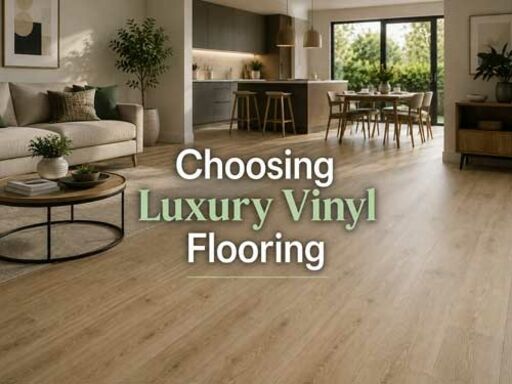
Luxury vinyl flooring (LVT) is a multi-layer synthetic floor built to look like real wood or stone, but priced and maintained more like a resilient floor than a natural one. The name covers a wide range of products, from thin, budget click planks to rigid SPC boards that will comfortably outlast a kitchen renovation. Here's what the differences actually mean for your project.
What's inside an LVT plank
Most LVT is built from four layers bonded together:
- Wear layer – the clear top coating that takes the daily punishment; its thickness is the main driver of durability.
- Design layer – a printed film giving the wood, stone, or tile look.
- Core layer – the structural part of the plank; can be flexible (standard LVT), rigid stone-based (SPC), or rigid wood-based (WPC).
- Backing layer – adds stability and, on some products, a bit of underfoot cushioning.
Knowing which core type you're buying matters more than the surface pattern, since it determines how the floor handles moisture, subfloor imperfections, and heavy furniture.
Wear layer ratings, in plain terms
- 0.15mm–0.2mm – light domestic use only, best for bedrooms and low-traffic rooms.
- 0.3mm – the standard domestic spec, suitable for most kitchens, hallways, and living rooms.
- 0.5mm+ – rated for light commercial use or very heavy domestic traffic, worth considering for a busy family hallway or home office that doubles as a client space.
You'll also sometimes see an AC rating (AC1 to AC5) on commercial-facing ranges, borrowed from laminate flooring standards, which gives a rough shorthand for foot traffic tolerance.
Core type comparison
| Core type | Waterproof | Best for | Trade-off |
|---|
| Standard LVT (flexible) | Water-resistant, not fully waterproof | Living rooms, bedrooms | Less forgiving of an uneven subfloor |
| SPC (stone core) | Fully waterproof | Kitchens, bathrooms, underfloor heating | Firmer underfoot, harder-wearing |
| WPC (wood core) | Generally waterproof | Similar uses to SPC | Slightly softer underfoot than SPC, marginally less rigid |
Fitting methods
- Click/floating – the fastest to fit, doesn't need adhesive, and is the most forgiving of an imperfect subfloor when paired with the right underlay. Common on SPC and WPC ranges.
- Glue-down – bonds the plank directly to the subfloor, giving the most stable long-term result and the best option for large open-plan spaces or commercial settings.
- Loose lay – held by weight and friction using a heavier, grippier backing, quick to fit and easy to replace a single plank, but generally best kept to lower-traffic rooms.
Getting the subfloor and site conditions right
- Check subfloor flatness, generally within about 3mm over a 2 metre straight edge for glue-down products.
- Test moisture levels on concrete subfloors before fitting, particularly in ground-floor or older properties.
- Let the flooring acclimatise in the room for the period stated on the product packaging before fitting; skipping this is one of the most common causes of gapping or buckling later.
- If fitting over underfloor heating, check the product's maximum surface temperature rating rather than assuming all LVT is compatible.
Our damp proofing and levelling range and underlay and insulation range cover subfloor prep and floating installs. For glue-down fitting, our adhesives range is matched by subfloor type. If you're specifically weighing up underlay options, our underlay guide for LVT flooring covers that in more depth.
Plank, tile, or herringbone format
LVT isn't limited to plank shapes. It's also available as:
- Tiles, for a ceramic or stone look without the cold underfoot feel or grouting work.
- Herringbone and chevron patterns, giving a parquet look at a lower cost and with more forgiving maintenance than real wood parquet.
- Versailles panel formats, a larger, more formal pattern used in period-style renovations.
Common mistakes worth avoiding
- Choosing a flexible standard-core LVT for a kitchen or bathroom expecting full waterproofing.
- Skipping the acclimatisation period because the fitting schedule is tight.
- Fitting glue-down LVT over a subfloor that hasn't been moisture-checked.
- Assuming all LVT is rated for underfloor heating without checking the specific product.
See it before you order
LVT's wood and stone effects can look noticeably different under real room lighting compared to a product photo. Order a few free samples and check them against your existing skirting, cabinetry, or worktops before committing. If you'd rather have it fitted professionally, our fitting service covers LVT installation across London.
Frequently asked questions
What's the difference between LVT and SPC flooring? LVT is the general category. SPC refers specifically to LVT built on a rigid stone-polymer core, which makes it fully waterproof and better at bridging minor subfloor imperfections than flexible standard LVT.
Is luxury vinyl flooring suitable for kitchens? Yes, particularly SPC or WPC ranges, which are generally fully waterproof. Check the specific product's rating before fitting near sinks, dishwashers, or exterior doors.
Do I need underlay under click LVT? Usually yes, unless the product has underlay pre-attached to the backing. Check the manufacturer's specification, since the wrong underlay can affect both feel underfoot and warranty cover.
How long does luxury vinyl flooring last? With a domestic-grade wear layer of 0.3mm and normal household use, LVT typically holds up well for 10-20 years, depending on traffic levels and how it's maintained.
Browse the full range of LVT and SPC flooring to compare cores, formats, and finishes in stock now.